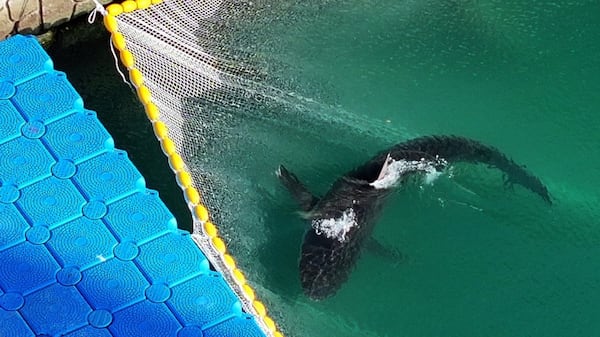
A northern Manitoba First Nation is suing the federal government, alleging it failed to protect the lake sturgeon its people have harvested for generations as decades of hydroelectric diversion devastated populations in the lower Churchill River. Tataskweyak Cree Nation, which is about 900 kilometres northeast of Winnipeg, filed the statement of claim on Oct. 15 in the Court of King’s Bench of Manitoba. It names His Majesty the King and the minister of Fisheries and Oceans Canada as defendants. The nation, which says it has more than 4,400 registered members, about 2,470 of whom live on the shores of Split Lake, alleges Canada breached its treaty obligations and its responsibilities under the Fisheries Act. The claim says the written treaty affirms that the First Nation signatories “shall have the right to pursue their avocations of hunting and fishing” throughout the treaty territory. “When our relatives entered into Treaty 5 with the newcomers, there was a trust which has long since been broken,” Tataskweyak Cree Nation Chief Doreen Spence said in a news release Wednesday. The claim alleges the Churchill River Diversion, which Manitoba Hydro operates to send water into the Nelson River system for hydroelectric generation, often diverts 75 to 98 per cent of the water from the lower Churchill River. It says the diversion became operational in 1976. Before the diversion, flows on the lower Churchill River at Missi Falls, near the diversion’s control structure, ranged between roughly 20,000 and 70,000 cubic feet per second, the claim says. Since then, it alleges they have ranged from about 500 to 115,000 cubic feet per second, with flows as low as 500 sometimes lasting for months. The First Nation claims the “unseasonal and significant alterations in flow” have harmed lake sturgeon, known as namao in Cree, by degrading their habitat, restricting access to spawning areas and diminishing their populations throughout the lower Churchill River. The claim says there is only one remaining recruiting population, which is near where the Churchill and Little Churchill rivers meet, which is confined to about a 40-kilometre stretch between Mountain Rapids and Swallow Rapids. It describes the population as vulnerable and at risk of extirpation. The First Nation alleges Canada has known about the harm for decades. The claim points to a 1975 Lake Winnipeg, Churchill and Nelson Rivers Study Board report, which it says was provided to the federal environment minister. It alleges the report included a paper warning that under minimum allowable discharges, the lower Churchill River would freeze solid, “obliterating most aquatic life.” The claim also alleges Canada knew, “based on its own studies,” that Manitoba Hydro’s operation of the diversion likely violates the Fisheries Act. The nation imposed a moratorium on harvesting namao in the mid-2010s, which the claim says remains in effect. It says the only formal harvest since was a single ceremonial one in the early 2020s, at the request of Elders. Many members, especially youth, have never had the chance to harvest or be nourished by namao, the claim says. In January, the nation released independent research it says shows changes to the diversion’s operations could help protect the species. The filing asks the court for a series of declarations, including that Canada breached its treaty obligations and that the diversion results in the death of fish and the harmful alteration of fish habitat. The claim alleges Canada’s conduct amounts to “a persistent pattern of error and indifference.” The nation says it has exhausted efforts to secure action through discussions and is now turning to the courts. A spokesperson for Fisheries and Oceans Canada said the department has received the statement of claim but cannot comment as the matter is before the court. None of the claims has been tested in court, and no statements of defence has been filed.