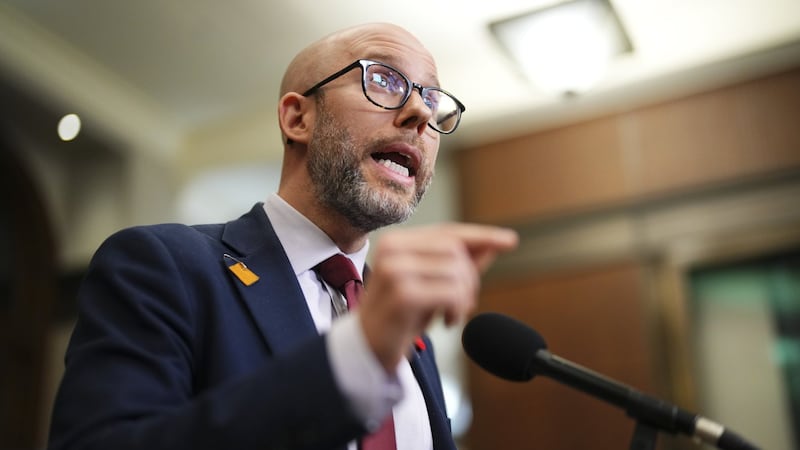
Calgary’s mayor is calling a special meeting of council, after the province announced substantial property tax increases in last week’s provincial budget. As Alberta stares down a $9.4 billion deficit, the province has decided to take more money from property owners to pay its education bills. The changes will see an increase to education property tax (EPT) rates to help fund school operating costs. Effective this year, residential and farmland EPT rates will rise to $2.84 per $1,000 of equalized assessment, while non-residential rates will increase to $4.17 per $1,000. For Calgarians, the average homeowner can expect to pay an extra $340 to the province, collected by the city. In an online post, Calgary Mayor Jeromy Farkas called it the “largest property tax hike in Calgary history.” “Let’s call this what it is. This is a form of equalization, a transfer payment taken from Calgary families and redirected elsewhere,” he said. “We want to work in collaboration with the provincial government but to have them increasing their take in the their property taxes on Calgarians in a very back door way, with an increase of about 60 per cent over 4 years, we haven’t seen a 60 per cent increase in support and funding here in Calgary so it’s very much about treating us with our fair share,” said Farkas. The average Edmonton homeowner will pay roughly an extra $150. “I get that home values are a little bit higher here in Calgary compared to Edmonton, but they’re not twice as high, and the fact that Calgary is getting hammered with twice the level of impact compared to Edmonton begs the question of fairness,” Farkas said. He argued that Calgary councillors have worked to keep the municipal property tax increase to two-per-cent. Finance Minister Nate Horner previously told reporters that his office has not considered a separate system for property tax collection. While Horner says he remains clear on not changing methods of tax collection, he has suggested Alberta’s tax structure might benefit from a refresh. Premier Danielle Smith recently said adding a provincial sales tax, for example, would depend on whether citizens have an appetite for it. The special meeting is scheduled to take place at 9:30 a.m.