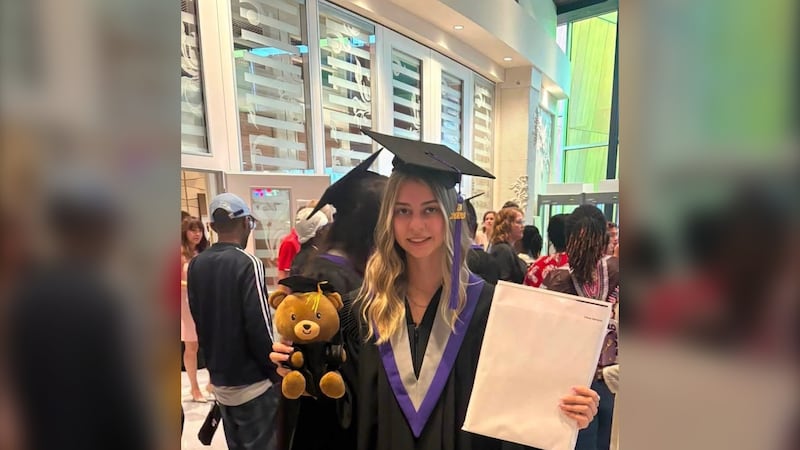
An Alberta woman is calling on the Canadian government for help getting her family out of a warzone after her local Canadian embassy shuttered in-person operations. Kristen Griffiths says she and her family are stuck in Qatar because of the war in neighbouring Iran has impacted the arrival of her son’s new passport. The Lethbridge, Alta.-born woman has lived in Qatar for the last five years. She applied to renew her son, Carter Cullen’s, passport on Feb. 18, as it was set to expire in May. By the time the conflict in Iran began on Feb. 28, the passport still had not arrived. She contacted the Canadian embassy on March 1 after the first missiles rained down in Iran, asking if the family could get an emergency travel document issued in case the passport didn’t arrive in time. But by then the embassy closed all in person services, and Griffiths says the embassy told her to wait for the passport to arrive. “At that time, they said that the embassy was closed for all in-person services and that it wasn’t possible for them to issue a travel document,” Griffiths told CTV News in the early morning hours from Doha, Qatar. “It’s an emergency travel document. I don’t understand how they have closed the emergency services and not given Canadians who are waiting on passports, (because) they must have a list,” she said. “I don’t know how they didn’t give any warning that these services were shut down.” Griffiths said she’s been in touch with Ottawa via email, but all the responses she’s received have said the only place to get a travel document is the now-closed embassy in Qatar. Cullen will be two the end of April, and she has a five-month-old baby. “It’s not a good feeling to be stuck in a place where you’re literally in a warzone and there’s no way you can get your family out,” Griffiths said. She said all the other embassies in Qatar, except for the U.S. embassy, are open and helping their citizens. Jillian Knoblauch is Griffiths’ sister who lives in Langdon, east of Calgary. She has also tried to help get her family out, but to no avail. “(Kristen is) trying to stay safe, happy and positive and telling us things are okay, but she can’t explain to her two-year-old why they can’t go outside,” said Knoblauch. “My other sister mentioned she was talking to her on the phone yesterday and sirens are going off. Sirens indicating a strike is happening. Everyone (told to) get inside,” she said. “It’s scary to think they’re there. Even more so, that they can’t leave if they wanted to.” Griffiths said she’s been invited to depart on evacuation busses leaving Qatar three times. Every time she’s given her family information, she’s been turned away because she needs an emergency travel document for her son. Despite her disappointment with how Canada has handled the safety of its citizens abroad, Griffiths said she’s happy with how the Qatar government has been looking out for people in the country. “We’re usually given warning when the missiles are incoming,” she said. “To give you an idea of what it feels like when they’re intercepting them, like the doors and the windows shake.” Her family has been staying indoors since Feb. 28. She and her husband are both working from home. “The idea that we can’t leave if we wanted to and we can’t get on these evacuation buses that Canada’s organized, it just leaves you feeling trapped,” she said. Griffiths said she’s asked Ottawa if they could mail the passport to Saudi Arabia. The government told her they outsource passport delivery and couldn’t help her. “How can you wait in a war zone for emergency services to reopen?” Immigration, Refugees and Citizenship Canada acknowledged CTV’s request for comment and confirmed they are working on the case but not send a statement in time for publication.