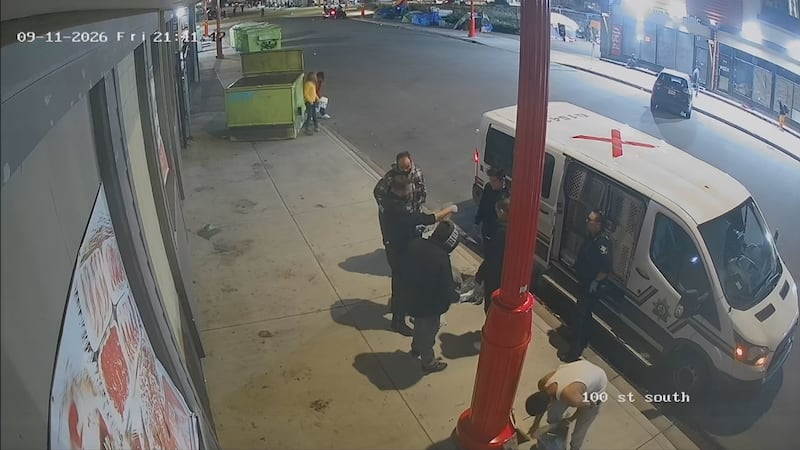
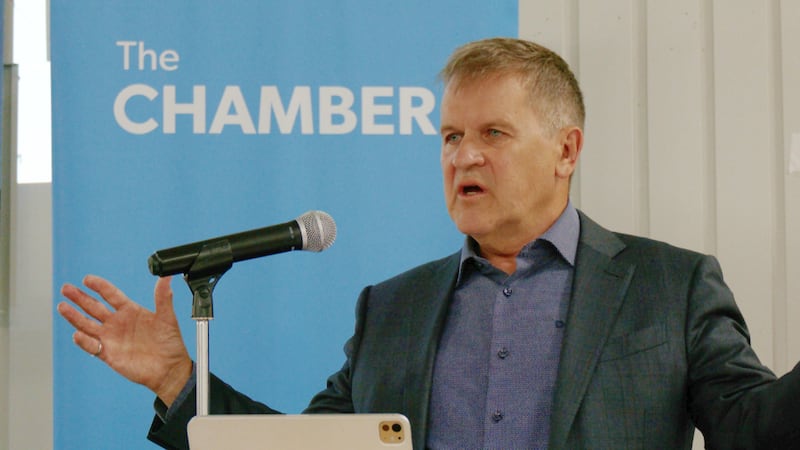
The Region of Waterloo has released new renderings of a major transit hub coming to downtown Kitchener. On Tuesday, at a presentation to the Active Transportation Advisory Committee, regional staff unveiled a site plan along with images of what the Kitchener Central Transit Hub could look like. The design features a public plaza with washrooms, secure bike storage, and a pedestrian bridge to the Iron Horse Trail. The two-level transit hub will also have a “community room” on the second floor and retail spaces for lease. Most importantly, the transit hub will connect Grand River Transit, ION trains, GO Transit, VIA Rail and intercity buses in one centralized location at the corner of King and Victoria streets. “I think this is a really good project and a really good design,” said Jeff Casello, a professor of transportation planning and engineering at the University of Waterloo. “The region has done a really nice job of prioritizing pedestrians, getting to and from the transit hub.” The presentation also included potential modifications along Victoria Street, such as priority lanes for buses. “A tiny bit of driver pain ends up being really important for us, to change the way in which people behave in the Region of Waterloo,” Casello said. “We’re sending the right signals for people to drive and travel the way we want them to.” Transit hub construction According to regional staff, the final design and procurement period is expected to wrap up by the end of 2026. “Underground hydro servicing on Waterloo Street and demolition of the non-heritage section of the Rumpel Felt building to prepare the site for construction are expected this year,” the region said in a statement to CTV News. “Work is also moving ahead on planned Victoria Street improvements, with utility relocations planned for summer 2026 and construction planned for 2027.” The grand opening of the Kitchener Central Transit Hub is set for 2031. Challenges and recent court ruling CTV News asked Casello if the region’s timeline was realistic. He said the design process is the easy part but unforeseen issues always arise during construction, especially with so many factors in play. “The interactions with the rail system, with the GO [Transit] system and the VIA [Rail] system, that’s trickier because the region doesn’t really have agency over when they can disrupt rail service,” Casello explained. “In general, I think [the timeline is] reasonable but you never know what’s going to happen. Whenever we do really complex urban projects, there’s always a risk things will run over time.” In December 2024, the region’s acting commissioner of transportation said construction would begin within the year. However, the project was delayed several times due to a homeless encampment at Victoria and Weber streets — which was supposed to be used as a staging area by Metrolinx. The region has lost two legal challenges to remove the encampment since 2023. The Ontario Superior Court recently ruled the region’s bylaw was unconstitutional, explaining they must find an alternative site for encampment residents, or implement a safe tenting protocol. In response, the region announced it was partnering with the province to appeal the court decision. Lasting impact Casello believes the project could change people’s perceptions around public transit. “It’s still not quite as visible as it ought to be in the region,” he said. “There are people who are really familiar with the transit system, but I think there are people who live outside the central transit corridor who just don’t see transit as a viable alternative. When you build something of this magnitude, that integrates all of those modes [of travel], it builds an identity for the transit system.” In total, $291 million has been set aside for transit investments. The Region of Waterloo has earmarked $80 million, while the federal and provincial governments have committed $115 million and $96 million, respectively. “I’m excited to see the way this is going to centralize so much of the transit efforts here in the region and see how impactful it will be in terms of attracting riders,” Casello said.