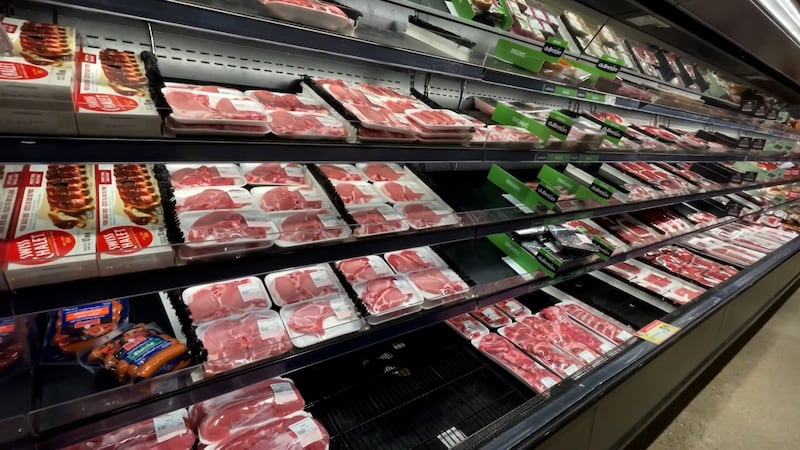
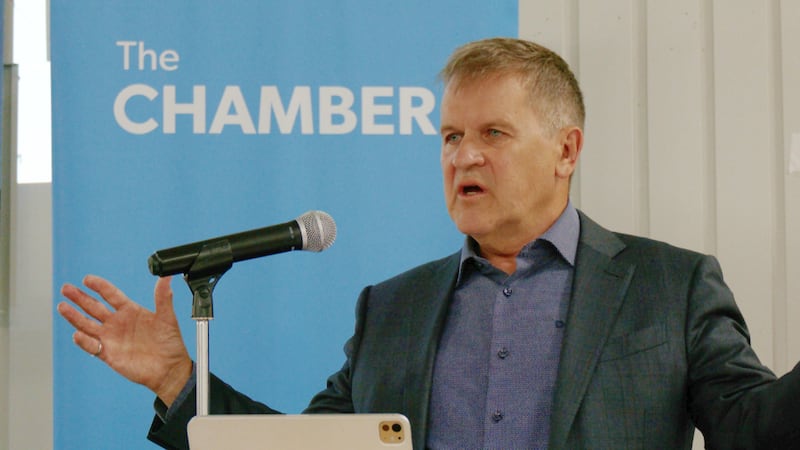
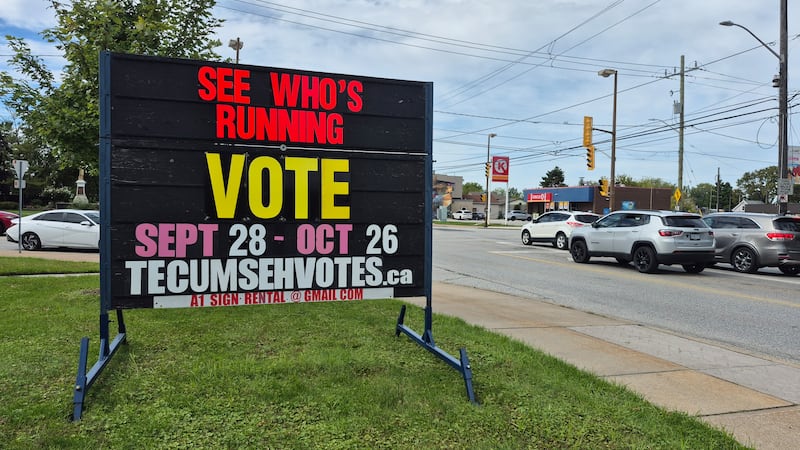
Capital Dispatch is a weekly newsletter, sent when Parliament is in session every Friday. To stay on top of what’s happening on the Hill, you can sign up to receive the latest political news and insights directly in your inbox, here. MPs return to Ottawa, a major new bill brings big drama, snap election in B.C. Parliamentarians are back in town, the slim majority Liberal government wasted no time in advancing contentious legislation, provincial politics heated up and Prime Minister Mark Carney spilled the tea to The New York Times. The week that was The fall sitting started with some new faces taking their seats – the result of the Liberal’s sweeping this summer’s byelections – and with some old issues being brought back to the top of the agenda. In the first question period back, Conservative Leader Pierre Poilievre picked up where he left off before the break, accusing Carney of driving inflation while noting Canadians can’t “eat speeches, summits or signing ceremonies.” The prime minister shot back, citing the three wars affecting costs in this country: the U.S. trade war, the war in Iran and the war in Ukraine, then noted what affordability assistance his government has offered. The major attention-grabber on the first day was the tabling of Bill C-39, a 232-page piece of legislation at building major projects faster and alleviating labour uncertainties. The Building Canada Strong Act proposes to reconfigure this country’s regulatory approval process, while vowing to uphold environmental standards and Indigenous rights. In a release, the government touted the bill as “the most comprehensive and ambitious reform to Canada’s ability to get big things built in a generation.” Though, the pushback has also been comprehensive. Labour groups have sounded alarms over changes to the Canada Labour Code rules around collective bargaining included in the bill, which they say will have adverse consequences for workers and strip them of their right to strike. Climate activists brought their discontent right to Parliament Hill, resulting in several seniors being arrested for trespassing. Donning shirts with anti-pipeline slogans, the protestors tried to deliver evidence of the effects of climate change to MPs. Though, business groups welcomed the legislative package, which also proposes to create zones of “national interest,” and ensure federal assessments of new projects take no longer than one year and are co-ordinated under a new streamlined process. Debate kicked off on the bill on Wednesday. Speaking outside of the House of Commons – as he remains seatless – NDP Leader Avi Lewis told reporters a day prior that he’s alarmed by Carney’s attempt to expand cabinet’s powers. Keep scrolling for his full reaction. Lastly, while the prime minister was in New York for the United Nations earlier this week, he sat down for an hour with The New York Times and made some news. The first attention-grabbing revelation was that he had thought through and made preparations for the possibility of U.S. President Donald Trump ordering a military invasion of Canada. He described the prospect as an “extreme tail risk,” referencing a financial term for events that are very rare, but would have enormous consequences, and are so unlikely that most people ignore or overlook them. “That’s not a base case, but it would be irresponsible not to” prepare for the possibility, Carney told The Times. Then, in a separate Times headline, the prime minister also shed new light on lingering domestic political questions. Specifically, Carney indicated he’s considering running for a second term, if the work he’s doing during his first is not complete. “It’s too early to start asking” he said, referencing whether he would run again. “My value as a member of my party is to hit on the big things and move forward. And then, at the end of that, you see how much has got done, and if something else needs to be done.” The prime minister, noting he has a majority government, said he’s aware a lot of what he’s committed to will take another year and a half to two years to yield results Canadians would feel, such as the development of major infrastructure and energy projects. His description of this was that it would be “beyond” the current political cycle. It was in this context that Carney downplayed the chatter around him potentially calling an early election. The next general election isn’t expected until October 2029. Not to be missed ‘A soap opera like no other’: Eby calls snap B.C. election October will be a big month for British Columbians, as they’ll now be heading to the polls twice. This week B.C. Premier David Eby called a snap provincial election for Oct. 24, one week after the provincewide municipal election on Oct. 17. As our West Coast colleagues report, Eby justified the move citing the “existential threat” posed by U.S. President Donald Trump’s administration and the need for British Columbians to have their say. Though, the embattled opposition was quick to balk that the move was little more than crass political opportunism. The call came just days after controversial B.C. Conservative leader Kerry-Lynne Findlay resigned amid a flurry of caucus departures. On Parliament Hill, MPs from the province were split down party lines – unsurprisingly – on the appropriateness of the election call. “One hundred per cent opportunistic,” said B.C. Conservative MP Frank Caputo. “I think it’s a good idea. Let’s get it over with. I mean, they’ve [the opposition] had lots of time to get organized,” said B.C. NDP MP Gord Johns. Port Coquitlam mayoral candidate Brad West put it simply: “B.C. politics is just reality TV,” West said. “There’s nothing quite like it. It is a soap opera like no other.” Trump takes aim at Canadian immigration levels The same day that U.S. President Donald Trump took to Truth Social to claim Canada is “destroying itself” with its immigration policies, new data from Statistics Canada shows the number of newcomers is actually going down. “Canada is destroying itself by allowing millions and millions of people into the Country, essentially unchecked and unvetted, and who are causing problems that will soon be too big to handle,” Trump wrote in a social media post Wednesday. “It is a Liberal takeover that will end very badly. Already showing up in their numbers. Big unemployment.” According to Statistics Canada, Canada’s population rose slightly by 0.2 per cent in the second quarter, while immigration is down 4.2 per cent year over year, and the number of non-permanent residents is down 0.7 per cent. As colleague Spencer Van Dyk reports, Foreign Affairs Minister Anita Anand called for the facts to prevail, when asked by reporters in New York City about Trump’s comments. “Canada has had a revised immigration policy since 2024, and we are certainly ensuring that our immigration levels, including in terms of temporary foreign workers, are reduced in order to stabilize the supports that are available to all Canadians,” Anand added. India’s Modi coming to Canada, to sign deal And, Indian Prime Minister Narendra Modi will be visiting Canada in December, and the expectation is that while he’s with Carney the leaders will sign a new Canada-India trade deal. “We are making good progress in our trade negotiations with India,” Carney said, before confirming Modi’s mid-December visit to Canada. “It is an exceptionally important relationship on many, many levels.” While Modi did come to Canada in June 2025, to attend the G7 Summit in Kananaskis, Alta., this visit will be an opportunity to demonstrate how relations have evolved after years of diplomatic strain over allegations of foreign interference and transnational repression. On the sidelines of the G20 in South Africa last November, Carney made it clear that he does consider India to be a reliable trading partner. “There will be some sources of friction. What I will say, with respect to India is that we don’t have a Comprehensive Economic Partnership Agreement with India, one of the world’s largest and fastest growing economies,” Carney said. “The ability to have more effective trade with them, to scale that trade with them, would be greatly helped by that,” he told yours truly at the time, referring to what difference having a CEPA would make. “I understand that there’s a little Carney mania going on in the world today. People are very enamored of the prime minister internationally and here in Canada. And it’s like we’re trusting this man with massive changes that are going to accelerate major projects at the cost of Indigenous rights and consultation, at the cost of our environment, at the cost of the protections that workers have… It’s a big bet, Canada. This is a big gamble, and I know the prime minister is incredibly popular right now. But let’s look at the details of what’s going on, and ask ourselves: Is this going to make my life better? Is this going to help me pay the rent? Is this going to help me buy groceries? It’s a big bet, and I think there are huge unanswered questions." — NDP Leader Avi Lewis, reacting to Bill C-39 on Parliament Hill Tuesday The week ahead It’s a constituency week next week. MPs will be back in their ridings to partake in local National Day for Truth and Reconciliation events. That means Dispatch will also take a pause and return with parliamentarians the first full week of October. When they do get back to debating, Bill C-39 will remain the major focus, and we’ll also have the first few opposition days of the fall sitting. Covering the latest political news from CTV’s parliamentary bureau in Ottawa, Rachel Aiello offers exclusive analysis on political developments straight from Ottawa.