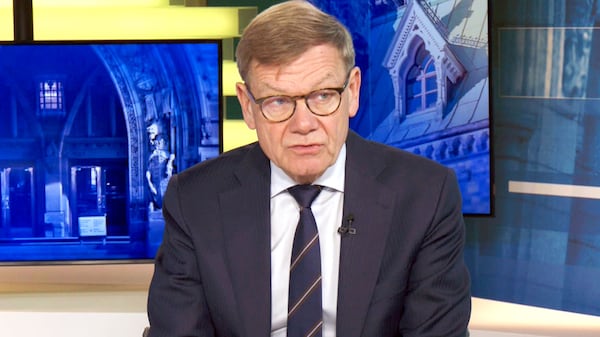
As a graph showing his blood sugar levels appears on a classroom smartboard screen, biology teacher Chris Schramek pointed to a sharp rise in the data. “So, you see this spike going up...and then it’s on its way down,” he told his students. At first glance, it looks like a typical science lesson at St. Andre Bessette Catholic Secondary School. But the data on display isn’t from a textbook or laboratory experiment, it’s coming from Schramek himself. The London teacher was diagnosed with type two diabetes several years ago. Like many people, he expected to manage the condition through traditional finger-prick testing. Instead, he began using a wearable glucose sensor (Abbott’s FreeStyle Libre 3 Plus Sensor Technology) that continuously tracks blood sugar levels throughout the day, providing real-time data on how food, exercise and stress affect his body. “Although my numbers are a bit high, they went up quite a bit because I definitely enjoyed all the wonderful food,” Schramek joked while reviewing recent readings with his students. The small sensor, worn on the arm, sends glucose information directly to an app, allowing Schramek to monitor changes as they happen. He said the technology changed the way he understands and manages his diabetes. “That’s like taking photos of an event versus having a sensor which tracks all day. That’s like having, you know, a live-stream video of an event all day,” said Schramek. “And so, it’s really important to have access to that data because it helps us make better choices in real time.” The information has also become a unique teaching tool. Rather than simply describing concepts such as insulin response and blood sugar regulation, Schramek can show students exactly what happens inside the body after eating a meal, exercising, or experiencing stress. Students regularly analyze his glucose data as part of their coursework, turning abstract biological concepts into something they can see and understand. For Grade 12 student Meg Harris, the approach makes science feel relevant beyond the classroom. “He definitely does lessons not where you’re just reading out of a textbook, but you’re actually doing labs, getting real-world examples of how all this science is actually going to apply to your life,” said Harris. “A lot of us are taking these courses because we’re going into the medical field.” Harris plans to study nursing in the fall and said seeing real-life examples has helped connect classroom learning to future patient care. The lesson also highlights a broader conversation about access to diabetes technology. While Ontario publicly funds glucose sensors for eligible insulin users, many people living with type two diabetes who do not use insulin face significant out-of-pocket costs to access the technology. Schramek believes wider access could help others better understand and manage their health before serious complications develop. “This is preventative,” he said. “This has saved my health and created a brand-new timeline for me. And I can’t emphasize strongly enough how much we need this.” “Sensor-based glucose technology, like Abbott’s FreeStyle Libre systems, provide real-time valuable insights that help people better understand and manage their diabetes. In Ontario, public reimbursement for the Libre systems is currently available for individuals with diabetes who use insulin. Individuals living with type two diabetes who are not using insulin may have access through private insurance or pay out of pocket, depending on their individual drug plan. For people without reimbursement or insurance coverage, the cost is set by the retailer or pharmacy and varies,” Abbott said in a statement.