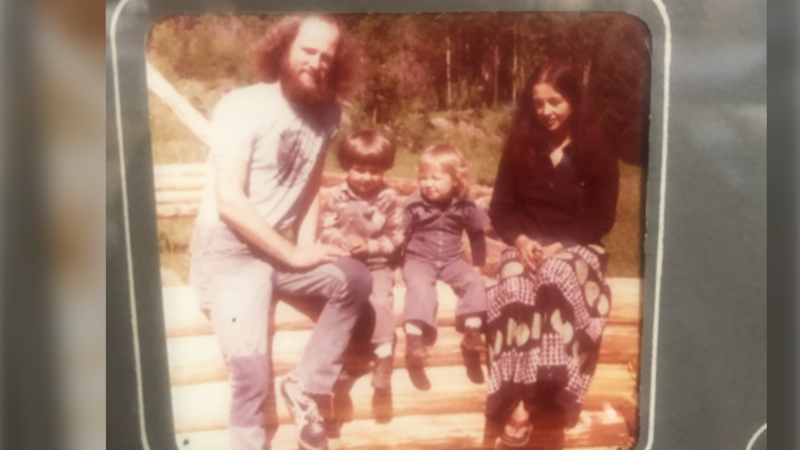
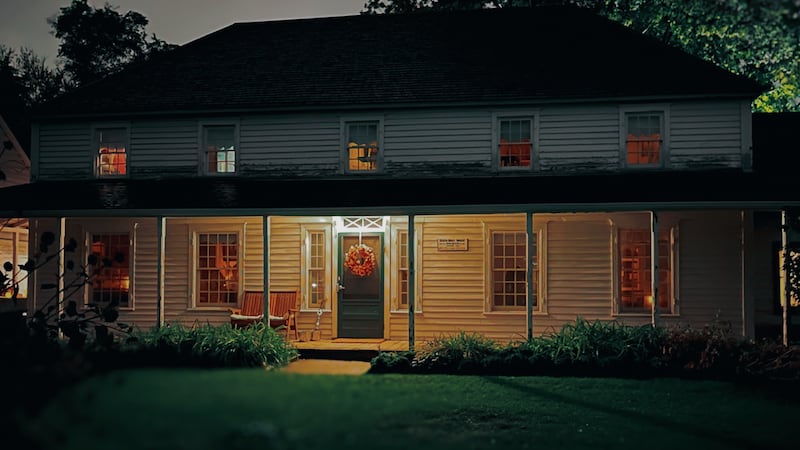
When Jim and Valerie Gillingham returned to Criss Creek weeks after the Sparks Lake wildfire forced them from their homes in 2021, tears filled their eyes as the relief of seeing their house still standing met the realization that much of their forest had burned. Half a decade later, they’re seeing hope return to the soil. The Gillinghams live about 90 minutes’ drive northeast of Kamloops in a heavily forested area that has been in the family since Jim bought it from a newspaper ad in 1971. A couple of hand-built log houses, raised children, and creativity made this land home. “We’ve been here over 50 years, and every structure you see and every fence, we put in,” he told CTV News. Jim said he and his wife became stewards of the forest, dedicating much of their lives to taking care of the land that helped provide for them—this livelihood was immediately thrown into jeopardy in late June 2021 when the flames surged toward their home from Sparks Lake, ravaging the majority of trees in the fire’s path. Describing that feeling after a lifetime of working on the land, Jim said, “You’re just so helpless.” The Gillinghams were evacuated for around six weeks and returned home to find the fire miraculously stopped at their fence line, but hectares of forest hadn’t been so lucky. Jim, 74 at the time, got to work right away—clearing burnt brush and renting equipment to continue caring for their land—because a burnt forest is a hazard. He and Valerie approached municipal, provincial, and federal government entities, hoping someone would help replant the trees, but no one answered. That is, until 2025, when a B.C.-based company reached out. Now, thousands of trees have been planted on the Gillinghams’ land, sowing hope where there was once despair. At 79, Jim doesn’t think he’ll be around to see a fully reforested Criss Creek, but he told CTV News that it brings him relief to know his grandchildren will. ‘We came here as kids’ The Sparks Lake fire began tearing through dry forest brush in late June 2021 and reached the Gillinghams’ land just days later, but this family’s story in B.C. began decades earlier. It started when Jim, born and raised in the United States, was a student at the University of Washington in the late 1960s, and some influential professors fascinated him with rural living and forest stewardship ideas. As he explained, land prices north of the border were more favourable, so that’s where he started searching. In 1971, he found what would be his future home in a newspaper ad. Jim said he travelled to Criss Creek to check out the land and meet its owner, and before long a deal was made. Eighteen months later, Jim met Valerie. Fast forward to 1976, with four-month-old and 18-month-old babies in tow, the young family drove north. The land was pretty much bare of structures, with forests, ponds, streams, and a well, Jim explained, so their first shelter was a canvas tent with a plastic sheet and a wooden cook stove. “We came here as kids,” he said. Jim built small structures for the family, walking materials six kilometres from the road, and Valerie cooked and baked—the two worked as partners to raise their young children while building a home from scratch, he said. 1976 was one of the wettest, rainiest years on record, so the family rented a cabin for the winter, not far from Criss Creek. Before long, Jim built a small log cabin they could call home regardless of the weather, using building materials logged from the land. “For me to get a log out of the bush is an all-day affair,” he explained, describing the work that went into the home. The couple’s children grew and so did their home, and Jim said he built the “new house” in 1985—again, all with logs from their forest. Harvesting these logs isn’t as simple as cutting down a tree and hauling it off; being a steward of the forest means dealing with the wood fibre left behind, including sawdust, branches, and stumps—otherwise, it is all wildfire fuel, he explained. “I remember the tree that I got the wood out of,” he recalled. “We’ve been stewards of the forest here since we lived here … that’s the prescription to minimize the damage of all these wildfires.” The decades that followed saw the Gillinghams reinvent the wheel on their property, generating hydroelectric energy and truly living off the land, as well as immersing themselves in the community, with Jim joining local wildfire response teams and teaching search and rescue programs. Forest constantly in recovery Jim explained that Criss Creek was torched by a devastating wildfire in 1909, long before he was born, which resulted in a beautiful and vibrant regen forest having grown by the time his family arrived. “I found out inadvertently that in 1909 the Criss Creek Fire was visible from Kamloops, so that was a big fire,” he said. “We bought the place in 1971—60 years later, basically—and that’s how long it took to naturally regen.” The forest thrived for much of the Gillinghams’ tenure in Criss Creek, until the mountain pine beetle epidemic took its toll in the early 2000s, leaving dead trees, dry underbrush, and other flammable forest fibre littered throughout their property. “The forest was left in a mess,” he said. That’s when dedication to forest stewardship came in handy, Jim said. He and Valerie got to work removing all the fibre that didn’t belong, and reached out to the federal government for support. That came in the form of a replanting initiative and brought seedlings back to the forest en masse. “We’ve dealt with everything as long as we’ve been here, and you just keep dealing with it,” he explained. “You don’t have any options; it’s not like you can just sit back and go, ‘OK. Well, I’m going to leave it like that.’” “We’re just not that kind of people.” By 2021, there was a healthy batch of regen forest from the 1909 fire, a very young section of forest after the mountain pine beetle replanting initiative, and 10 to 12 hectares of old-growth fir and spruce—some trees as thick as 20 inches in diameter—making up their 70-hectare property. ‘Like a nuclear bomb’: The Sparks Lake wildfire During the brutal heat dome event B.C. endured in 2021, Jim got a call from a neighbour. It was Monday, June 28, and he was told there was a fire at Sparks Lake, about 10 kilometres from his family home. The Gillinghams started preparing, but the danger became apparent the next day. “We got up Tuesday morning, and you could see the size of the plume looked like a nuclear bomb,” he said. Jim said he never got an evacuation order, but Valerie made it to town on Wednesday, called, and said, “You better get out of there. You’re not going to be able to get out of there.” “I couldn’t drive on the Red Lake Criss Creek Road—it was already closed—fire on both sides of the road,” he recalled. “I went up further north about 20 kilometres and took the Sawmill Lake Road into town. From the top … all I saw was a line of fire as far as I could see and as high as the trees.” When Jim reunited with Valerie, he told her, “I don’t think we’re going to have anything to go home to.” Wildfire crews escorted Jim and two of his children in on Saturday to check on the house, six kilometres from the main road and only accessible by a service road surrounded by forest. “The road into our place was burning on both sides … we thought we weren’t going to make it out,” he said, noting that he and wildfire crews began running pumps up a hill to protect the house. “This wildfire fighter, Sarah, radioed from our front porch to I’m not sure where, but I heard her say that we’re going to get trapped in here and lose the place.” Just moments later, Jim said a six-blade helicopter came and started dumping water behind the house. “For the next two hours, three six-blades every six or seven minutes came and dumped water on the fir forest behind the house that was on fire,” he recalled. A structural protection crew drove onto the property and joined Jim and his family in setting up sprinklers, and that night they left, unsure what they’d find when they one day returned home. According to the B.C. Wildfire Service, the human-caused Sparks Lake blaze grew to 95,980 hectares, or 959 square kilometres. A UBC case study detailed that 52 buildings were damaged or destroyed by the fire, which burned out of control for 69 days. Jim said he, Valerie and their dog stayed at Silver Sage Campground in Kamloops until the evacuation order was lifted on Aug. 11. That day, they returned and drove back onto the Criss Creek property they called home for 50 years, and found the house untouched by the flames, still standing. Asked how that felt, Jim said, “You cry; I’m crying thinking about it. It just is overwhelming, and I’m sure it’s the same for everybody.” “We don’t know why this has happened, for us to be spared,” he said. “To think you’re going to lose it is absolutely devastating. I don’t know that you can recover or would recover, and then to realize that somehow it survived … and all the work for 50 years is still here; it’s literally overwhelming.” “You don’t know why, because so many people have lost so much, and why not us?” he added. “Whether it’s the grace of God, prayers, angels, karma. There’s no telling why we survived, but believe me, we’re thankful.” ‘I don’t think I’ve ever wanted to do anything else’ Asked what getting back to normal felt like for him and Valerie after weeks of despair, Jim said he doesn’t think they’ve ever gotten back to pre-fire normal. The Gillinghams spent the next few years out on the bush nearly every day, removing hazardous burned timber. Their house was safe, but the forests they’d spent their lives tending to were in terrible shape, with standing dead trees falling daily, and charred forest fibre everywhere they looked. “It’s all falling now, so we can never go anywhere out here without having a chainsaw in the car … every trip there’s three or four trees across the road, and so that’s going to be a never-ending project,” he said, explaining that all of this excess wood has to be gathered in piles and burned in the rainier months. Like when their forest was ravaged by the mountain pine beetle, the Gillinghams got to work, reaching out to see who could help replant. Years went by, and they kept clearing burnt material, but one day in 2025, Jim received a call from Andrew Steeves at Cariboo Carbon Solutions, who wanted to use funding from the federal government and non-governmental organizations like Tree Canada and Forest Canada to replant. Steeves and his wife met with Jim and Valerie, surveyed the land, and within a year they had tree planters on site. Data shared with CTV News detailed the planting of 4,635 trees—a mix of Douglas fir, ponderosa pine, lodgepole pine, and Engelmann spruce—in May 2025. “Without the planting, it wouldn’t generate the same,” Jim said. “It’s very gratifying; we wouldn’t be able to do it without them—that simple, we wouldn’t get it done.” “I don’t think I’ve ever wanted to do anything else,” he said with a smile. “One of the reasons we moved out here was because of the forest, and not just me; my wife has looked after it. She’s done as much cleaning and thinning and stacking as I’ve done, and it’s been very gratifying, to say the least.”