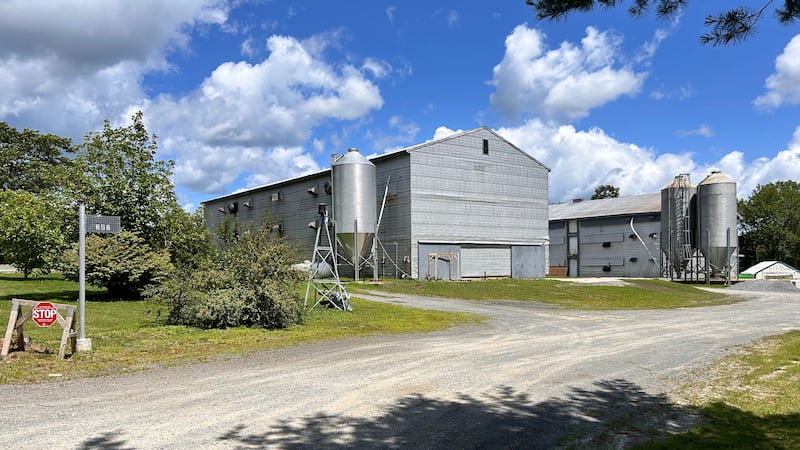
Less than five years after welcoming its first tenants, city hall is reporting progress on a restoration and security plan to fix the troubled public housing at 122 Base Line Rd. W. A report to the Community and Protective Services (CAPS) Committee details the steps taken since council approved a $500,000 plan that includes tenant transition, capital improvement, and operational stabilization activities. Deputy Mayor Shawn Lewis explained, “What we’re seeing is progress that’s trending in the right direction. Improvements are happening. The building’s getting safer. Changes are being made.” In February 2025, a scathing audit report determined that the building was designed for low-support affordable housing, but instead was filled with an inappropriate mix of high-acuity and vulnerable tenants, which led to serious security issues and a rapid decline in the condition of the building. Last December, council directed city staff to undertake a three-part plan: Resident Linda Mason has noticed improvements to the condition of the common areas, “When you’re walking into the building, it used to be covered in graffiti and rudeness. I don’t think anyone wanted to live like that.” The progress report by city staff suggests safety has improved as well, “Q1 2026 data reflects a major operational improvement, with overall incident volumes declining by approximately 47 per cent compared to Q4 2025.” But using Q4 2025 as a comparison requires additional context about a spike in incidents late last year that is included in a memo by building operator London and Middlesex Community Housing (LMCH), “Q4 2025 saw a sharp escalation in trespassing and access control incidents, increasing by approximately 166 per cent over Q3.” “That spike we see in the fourth quarter happens at every building right across the city. It’s not unique to 122 Base Line as winter comes along and people start letting others in, or people are followed into the building,” said Lewis. Trespassing and access control concerns continue to be the primary operational challenges, particularly during overnight hours. Planned improvements include stronger building access control, enhanced CCTV coverage, and exterior lighting upgrades. LMCH also suggests that efforts to relocate high acuity tenants who are responsible for many of the security problems will take more time because several refused voluntary relocation to more appropriate highly-supportive housing. “Early findings from the initial 90-day engagement period confirm that voluntary transitions alone will not sufficiently address high risk tenancies,” the memo reads. “There’s limits to how fast that can happen,” Lewis acknowledged. “The tenants have legal leases. We can’t force them to move until we go through the Residential Tenancies Act and the Landlord Tenant Board processes. So we try to work with them first to get voluntary compliance, to get a voluntary opportunity to move into someplace where they can get more support.” A council committee will consider the progress report on June 8. In 2022, the initial mix of tenants in the 61 units were included: