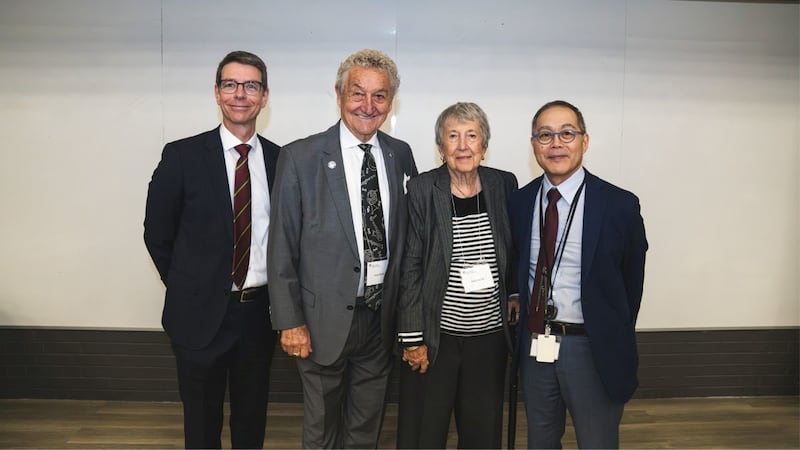
For many high school students, stepping inside a medical research laboratory is an opportunity they may never have. A summer internship program at Western University is changing that by giving students firsthand experience in child health research while introducing them to careers in science and medicine. The ENRICH (Empowering the Next Generation through Research Internships in Child Health) program, founded by Children’s Health Foundation and delivered through Children’s Health Research Institute (CHRI), pairs high school students with researchers and mentors for a summer of hands-on learning. Participant Ibrahim Ahmed says the experience has already helped him prepare for his future. “It’s been going really well. I’ve been learning a lot, and I’ve been getting familiarized with campus. And I feel like it’ll be really helpful for when I actually come to Western because I’m planning on coming to Western after high school,” Ahmed said. Students work alongside scientists in research laboratories while gaining exposure to research techniques, professional mentorship, and potential career paths in medicine, biotechnology, and health sciences. Dr. Bryan Allman, a researcher at Children’s Health Research Institute and an associate professor at Western University, says the program helps create opportunities for students who may not otherwise have access to research experiences. “One of the most valuable commodities for junior scientists or scientists in training is having choices. And choices are predicated on opportunities,” Allman said. “There are a lot of curious, capable students who just don’t have those opportunities... and that’s why this program is so valuable.” Organizers say the internship is designed to remove barriers by providing students with mentorship, professional development, and practical laboratory experience early in their academic careers. For Nathalie Elbaghdadi, a former ENRICH participant, the program helped shape her future. “ENRICH really helped that by giving me exposure to a real research facility. It built my confidence and gave me a clear direction on where I wanted to go,” she said. “It definitely influenced my decision to go into biotechnology.” Now serving as a mentor, Amy Pietrantonio says watching students develop is one of the most rewarding parts of the program. “To be mentoring someone, to get that experience of teaching and guiding someone along the way. But what’s more rewarding for me is watching the student grow and learn and just watching them be really interested and excited about the work,” Pietrantonio said. Organizers hope the program will inspire the next generation of child health researchers while helping students build the skills and confidence needed to pursue careers that could one day improve the lives of children and families across Canada.