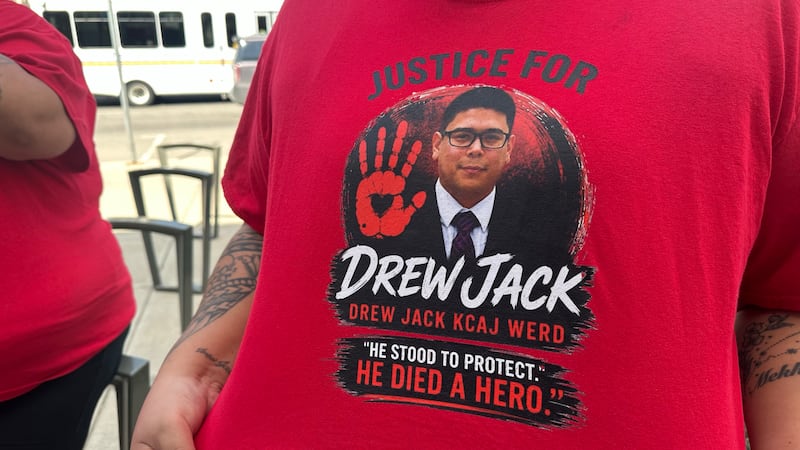
Although the killer of a man from Carry the Kettle Nakoda Nation has been sentenced, the victim’s family is continuing to call for justice. Last week, a teenager, who is also from Carry the Kettle, was sentenced to three years for the death of 31-year-old Drew Jack. However, Jack’s family expressed disappointment in the decision. “Our family left the sentencing feeling the justice system failed Drew and those of us who will grieve him for the rest of our lives,” read a statement to CTV News. Jack died from a gunshot wound to the torso on March 21, 2025. On that night, he and several adults went looking for a stolen vehicle and a group of youths on Carry the Kettle Nakoda Nation. When Jack intervened in an argument between a girl and the offender, he was then shot by the offender. The youth, who cannot be named under the Youth Criminal Justice Act, was charged with manslaughter. He pleaded guilty to the charge in April 2026. On Aug. 20, the teen received the maximum youth sentence of three years, with credit for time served in pre-trial custody in addition to “one year of structure” to help him reintegrate back into society safely. Nonetheless, family members of Jack’s say the penalty is “justice denied.” “The offender was carrying a handgun. We heard in court that the shooting was not intentional, but we struggle deeply with that reasoning. Carrying a handgun is itself a choice,” read the statement. “It is a decision to possess it, to carry it, and to bring it into a situation where it can be used. When that decision results in a death, we believe accountability must reflect the seriousness of that choice and the life that was taken.” The statement also referred to the offender’s medical history from a psychology report, along with the teen’s challenges related to culture and identity, stating those circumstances should have not been “used in a way that minimizes personal responsibility for taking another person’s life.” “Our family is particularly disappointed that an adult sentence was not pursued. Given the seriousness of this case and what was presented in court, we expected every possible avenue for accountability to be explored,” the family wrote. “ … When the 365 days in custody are over, someone will walk out and continue his life. Our family will continue serving a life sentence of grief. Drew will still be gone. His son will grow up without his father. His mother will live with an empty place where her son should be. “… There is no release date from that sentence.” Jack’s family also stated they felt they were treated unfairly moments after the teenager was sentenced, as the teen’s mother was able to say her goodbyes in the courtroom. “Security escorted members of the offender’s family while Drew’s family felt watched and treated as though we had done something wrong. We were there because someone killed a person we love. We would not have been there at all if Drew had not been killed,” the family stated. “There was another moment in that courtroom that caused unimaginable pain to Drew’s mother. She had to sit and watch as the offender’s mother was permitted to hold him, embrace him, and speak with him in front of her … She could reach out and hold her son. Drew’s mother will never be able to reach out and hold Drew again.” Jack’s family expressed a desire to see changes to the Youth Criminal Justice Act to better reflect “how victims and families are treated throughout the process.” For his sentence, the teenager will serve two years behind bars, followed by one year in secure, closed custody, six months in open custody, and 180 days of community supervision. He is also prohibited from carrying a firearm for 10 years following the conclusion of his sentence. “We are not asking for revenge. We are asking for accountability,” read the statement. “Justice was denied. No justice for Drew Jack.”