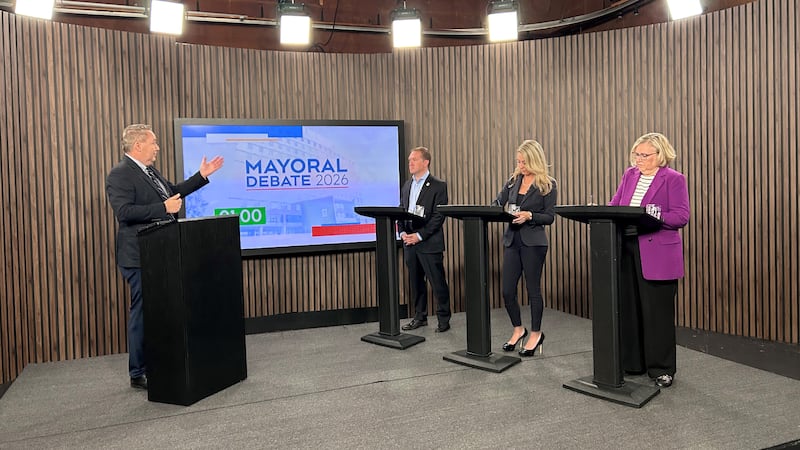
There are less than two weeks to go in B.C.’s provincial election campaign, and the latest polling shows the Conservatives remain in the lead. The Lorne Doerkson-led party is currently sitting at 44 per cent support among likely decided voters, up four percentage points from August, while David Eby’s NDP is at 42 per cent, according to a Research Co. poll conducted over the weekend. The B.C. Greens have dipped into the single digits at eight per cent, and CentreBC and OneBC received two per cent each. Crucially, Research Co. president Mario Canseco points out that many more voters remain undecided today than at this point during the 2024 election campaign. His poll found 15 per cent of British Columbians are undecided, compared to eight per cent two years ago. “There’s a lot of people out there—because this election is happening early, because they don’t know who the leader of the B.C. Conservatives is, because they might be mad at David Eby for calling the election—who are not really sure where they’re going,” he told CTV Your Morning Vancouver on Tuesday. He said many voters aged 55 and older remain undecided, and where they land after Wednesday’s leaders’ debate will be a defining factor in who wins the election. The poll also asked what British Columbians think about Doerkson for the first time—and he received a 45 per cent approval rating. Eby’s approval rating remains at 49 per cent, the same as the August poll. Meanwhile, the Green Party’s Emily Lowan has an approval rating of 39 per cent and Elenore Sturko of CentreBC and OneBC leader Dallas Brodie each have 26 per cent. “It’s a remarkable turnaround for the Conservatives in the sense that we had Kerry Lynne-Findlay at an approval rating of around 30 per cent,” Canseco said. “So people are really connecting with what (Doerkson) is saying.” The poll found 64 per cent of voters are happy that Findlay is no longer leading the party. However, Canseco pointed out that many British Columbians do not know who Doerkson is yet, and there’s a lot at stake for him on Wednesday when he will try to pitch himself as premier material. One quarter of British Columbians said the economy and jobs were the most important issues facing the province heading into the election, followed by housing, poverty and homelessness at 23 per cent. “The last couple of weeks of the campaign have to be about bread-and-butter issues. This is why we’re seeing more announcements, more things about related to health care, related to finances, and really not talking a lot about Donald Trump anymore,” Canseco said. Research Co. said the results are based on an online survey conducted from Oct. 9 to 11, among 808 likely voters in the election, including 687 decided voters. The data was statistically weighted according to Canadian census figures. The margin of error is plus or minus 3.5 percentage points for the entire sample and plus or minus percentage points for the sample of decided voters, 19 times out of 20.