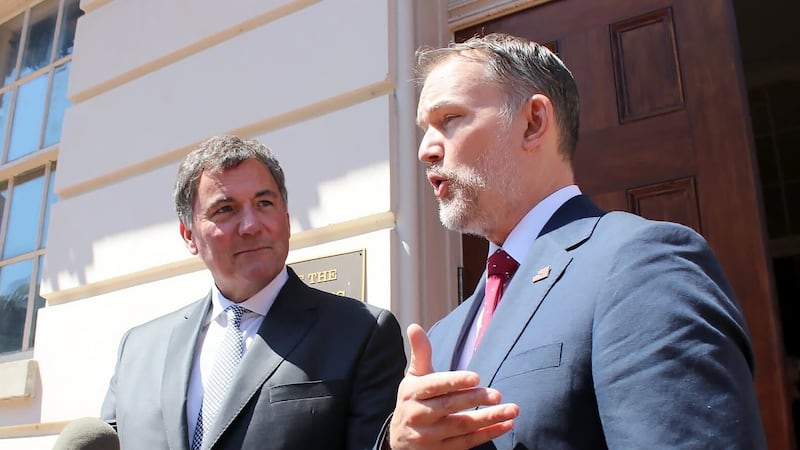
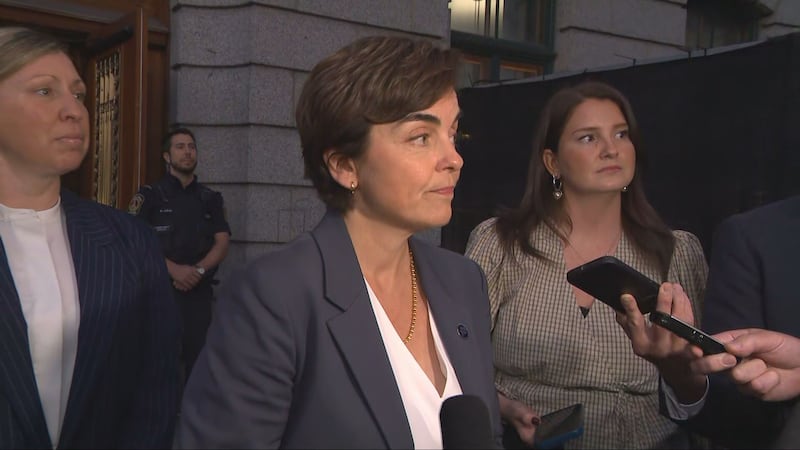
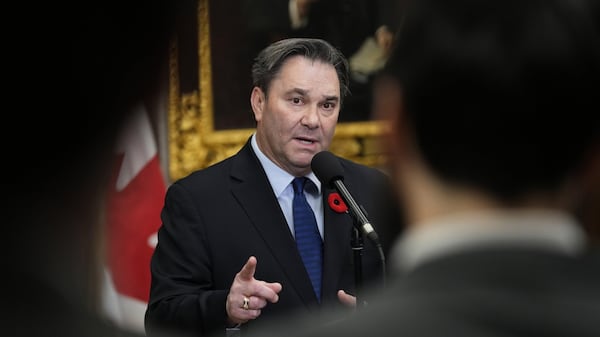
A coalition of Indigenous leaders and the B.C. premier are demanding the federal moratorium on oil tanker traffic off the province’s north coast be upheld. It’s a potential wrench in the Alberta government’s hope for another oil pipeline project to western shores. “We want this tanker ban to stay in place,” said Gary Reece, Lax Kw’alaams mayor, during a Wednesday morning news conference in Vancouver. He and Chief Marilyn Slett, president of the Coastal First Nations/Great Bear Initiative, signed a declaration to protect British Columbia’s northern coast. “We cannot afford to let this happen—to try and lift that tanker ban,” said Reece. The oil tanker ban has been in place since 2019, a few years after the failure of the Northern Gateway project to connect Alberta bitumen to Kitimat, B.C. B.C. Premier David Eby says oil tanker traffic should never resume and opposes renewed interest in a new pipeline from northern Alberta to the coast. “This declaration is not a reaction to Alberta,” said Eby. “It is really difficult for me to shadowbox with a non-existent project that has non-existent benefits because it will never be built.” He also said there was local support for fisheries, tourism and existing liquefied natural gas projects, but not for oil export. Alberta Premier Danielle Smith doesn’t see it that way and, in a statement to CTV News, said, “A single parochial premier cannot block the export of the most valuable asset of 5 million Albertans.” A later statement had that line removed, but Smith continued to say, “We have heard Premier David Eby’s concerns and are working to address them.” “We agree there needs to be a credible proponent and extensive First Nations engagement and co-ownership for this project to move forward. We are working hard to ensure both of these requirements are met as soon as possible and ask for patience as we work through the process,” the statement read. “However, the federal government has control over interprovincial trade and commerce. We expect the federal government to support this project, which will unlock the most valuable economic asset of 5 million Albertans.” Energy experts say that securing support from affected First Nations along the stretch of a hypothetical pipeline will take considerable time to be done responsibly. Otherwise, there is a risk the project will face court challenges for failing to consult with Indigenous stakeholders and could suffer the same fate as the Northern Gateway project. “We absolutely need better market access for our bitumen—it’s a huge opportunity to grow wealth from the country. We know how to do it, but there’s no easy path right now,” said Richard Masson, executive fellow at the University of Calgary’s School of Public Policy. Alberta is leading a working group with three major pipeline companies—Enbridge, Trans Mountain and South Bow—to explore a route to northern B.C. All declined to comment or did not reply to requests. There are also environmental concerns unique to the rugged fjords near Kitimat, according to researchers. Earthquakes, tsunamis and landslides create an environment of complex risk above and beyond the risk of pipelines or oil tankers themselves, says Dan Shugar, associate professor in the Department of Earth, Energy and Environment at the University of Calgary. “A landslide can trigger a hazard cascade. It can trigger a big wave in that fjord or lake. That wave can propagate out of the fjord, impacting whatever infrastructure, whether it’s villages or ships or pipelines along the coast,” he said. Smith said she expects Prime Minister Mark Carney to announce changes to the oil tanker ban by Grey Cup Sunday on Nov. 16. In the weeks to follow, her government would apply for a pipeline at the Major Projects Office, established by the Carney government and headquartered in Calgary.