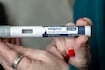
Patients who switched from weight-loss injections to Novo Nordisk’s daily Wegovy pill continued to lose weight, according to data unveiled at a medical meeting on Wednesday, as the Danish drugmaker seeks to defend its lead over U.S. rival Eli Lilly in the market for oral obesity treatments. Study participants lost an average of 4.1 per cent of their body weight over three months after transitioning from injectable obesity therapies — including Wegovy and Lilly’s Zepbound — to oral semaglutide, the active ingredient in Wegovy, as well as Ozempic. Patients lost an average of 4.0 kg (8.8 pounds) from a baseline weight of 221.6 pounds (100.5 kg) after making the switch, and the proportion of participants classified as clinically obese dropped to 65.5 per cent from 87.1 per cent after three months, with nearly 41 per cent shedding at least 5 per cent of their body weight. “There’s been a lot of questions on can people be compliant to the pill? Do people really prefer the pill? Clearly, a lot of patients do even better on the pill than they did on the (injectable) drugs, and I think that is strong data,” said Novo’s Chief Scientific Officer Martin Holst Lange in an interview. Detailed data from the 194-patient, real-world study was presented at the European Association for the Study of Diabetes meeting in Milan. Pill brings Novo relief Novo’s fortunes have reversed sharply since it became Europe’s most valuable listed company following the 2021 launch of injectable Wegovy for weight loss. Its shares have tumbled more than 70 per cent from their peak, as Lilly has overtaken Novo as the obesity-drug market leader. The company has found some relief with the Wegovy pill. Oral therapies now account for about a third of U.S. obesity prescriptions following the pill’s rollout, according to company presentations earlier this month, with Novo capturing more than 80 per cent of new oral prescriptions. Novo CEO Mike Doustdar told Reuters last week that weight-loss pills could capture as much as half of the global obesity-drug market, which analysts estimate could be worth US$100 billion annually or more by the end of the decade. The data was compiled in collaboration with U.S. telehealth company Ro. While real-world findings reflect actual clinical practice, they rely in part on patient self-reporting and cannot establish direct causality as randomized trials can. The Wegovy pill has launched in the U.S., Britain, Germany, and the UAE, with rollouts in additional markets planned in coming quarters. Reporting by Patrick Wingrove in London; Editing by Bill Berkrot.