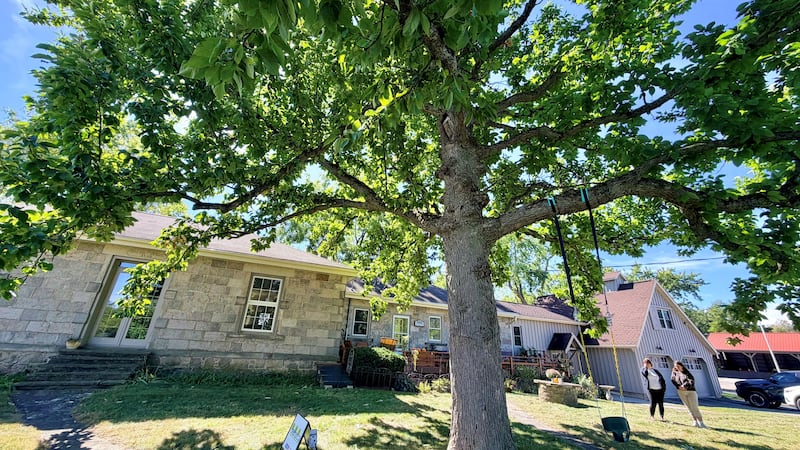
A popular historic site in Waterloo Region is reopening following a three-year closure for repairs and upgrades. Doon Heritage Village features a look at life in the summer of 1914 in what is now Kitchener, but then known as Berlin. Supporters, politicians and media got a preview of the upgrades during a celebration on Thursday morning, where Regional Chair Karen Redman rang a ceremonial cowbell to officially mark the reopening. The site returns with a new tagline: “One village, many stories.” Katie Anderson, head of Doon Heritage Village, said that was a theme that emerged during consultations. “People really do enjoy the stepping back in time to 1914 and the costumed interpreters, but really, going forward, what we heard from the community is to expand the stories that are told here,” Anderson says. To that end, the second floor of the historic Martin House now includes an exhibit weaving together the life of Mennonites and the stories of Black families who came to the same area decades later. “Vintage Black Canada: A Doon Village Introspection” is curated by Aaron T. Francis, who said it’s particularly meaningful to share this exhibit in a place that he visited while growing up in Waterloo Region. “It was my family story going from Jamaica to England to Waterloo region in the 60s, and thriving here as we have,” Francis said. The exhibit features photos taken by Francis’s grandfather, who was a welder by trade but who took and developed photos as a hobby. He eventually became a popular photographer in the growing Black community in the region. In addition to the photos, the exhibit also includes other items. Francis said it’s not always obvious which are from the early 1900s and which are from the 1960s. “There’s so much in common -- the quilts, the clothing, the dresses that you’ll see in the photos.” “His exhibit is an opportunity to have a dialogue between different communities and looking at more so the parallels and the similarities that exist among the families that call Waterloo Region home,” Anderson said. Other changes to the village include new signs to help guide visitors through the 60-acre property. There are improved accessibility features. Old ramps that led to the back doors of some buildings have been replaced with new ones in the front. “Everybody enters the building through the same door and has the same experience, which is a little more welcoming for everyone,” Stacy McLennan, supervisor of collections and exhibits at the Region of Waterloo Museums and Archives, said. There are also new planter boxes which bring items that are also found growing in the garden closer to everyone. For visitors who may find areas like the noisy blacksmith shop overwhelming, backpacks with items that can help are now available at the front desk of the Ken Seiling Waterloo Region Museum. “Having hearing protection and maybe the sunglasses might help people feel a little calmer and more relaxed in the space and would allow school kids in particular to still enjoy the school program,” McLennan explained. All told, the cost of the updates is approximately $2.3 million. Even with the changes, the site is still intended to remain true to the classic and nostalgic experiences that the village holds for so many people in Waterloo Region, immersing visitors into life in 1914. “It was such a pivotal year in Canadian history,” Emily Jolliffe, head of programming at Doon Heritage Village and Ken Seiling Waterloo Region Museum, said. “All the changes of industrialization were coming. The First World War was about to break out. It was a very interesting time in Canada.” The village will formally reopen to the public with a free event on July 1, Canada Day. It will remain open for the season, 11 a.m. to 4 p.m., seven days a week, until September 6.