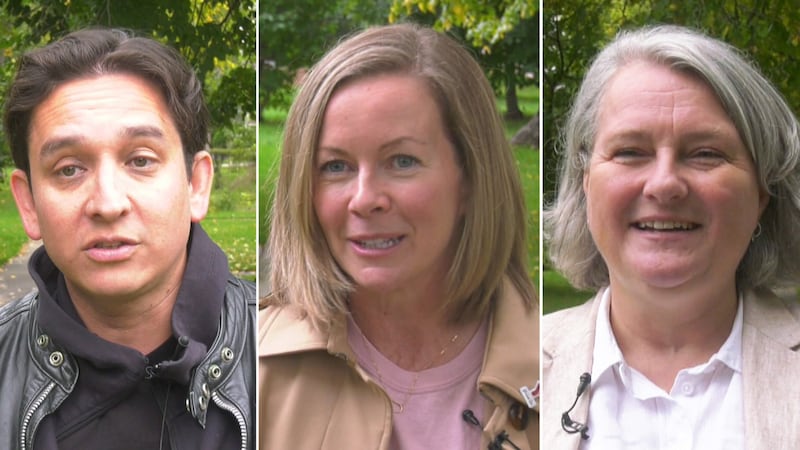
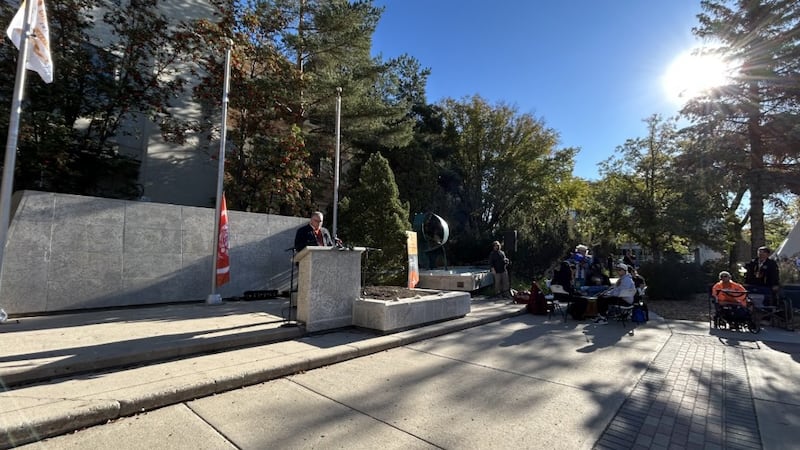
The MPP for Kitchener Centre and community advocates are calling on the Ontario government to make restorative justice an option for victims of sexual violence who may not want to go through a criminal court process. “For too long, justice responses to sexual violence in Ontario have overwhelmingly relied on the traditional criminal legal system,” Clancy said at a media conference held at Queen’s Park Wednesday afternoon. “While that system plays an important role, we know that there are flaws and it does not meet the needs of all survivors.” Clancy says there are alternative avenues to help survivors of sexual violence find the accountability, healing, truth, safety and repair they seek, including restorative justice. Restorative justice involves bringing together those who have caused harm, those who are affected by it, and the broader community for dialogue, in an effort to move towards healing, understanding and meaningful accountability. “A one-size-fits-all system does not always lead to the best outcomes,” Clancy said. The call is supported by the Sexual Assault Support Centre of Waterloo Region (SASCWR) and Kitchener-based Community Justice Initiatives (CJI), with the executive directors from both organizations joining Clancy at Queen’s Park Wednesday. SASCWR’s Sara Casselman says the recent trial of former neurologist Jeffrey Sloka highlights many of the problems of the court system when it comes to sexual assault cases. “For years, the survivors in that trial carried extraordinary emotional burden through a process that was lengthy, public, invasive and painful,” Casselman said. The Sloka trial spanned four and a half years, with a judge ultimately acquitting Sloka on all 48 counts of sexual assault. “When the verdict was delivered, it was deeply harmful to survivors,” Casselman said. “It reopened wounds. It reinforced fears about coming forward, and for many, it deepened a mistrust in our criminal justice system.” “We know that survivors are the best people to determine for themselves what healing and justice means to them,” said Kate Crozier, executive director of CJI. Crozier says restorative justice is not about forgiveness, minimizing impact or reconciliation, but rather about addressing the emotional and practical needs of survivors of sexual violence. “Survivors tell us what is often helpful to them is having the person who harmed them admit to what they’ve done, and do the hard work to figure out why they did it, to make and follow through on a plan to make sure that harm never happens again, and that there’s no more victims.” Crozier cited two examples of how restorative justice led to better outcomes in cases of sexual assault. In one case, a person who was harmed by a family member used the restorative justice process to develop an agreement to ensure there was no contact during family gatherings. In another situation, a survivor wanted the assault admitted to in a letter, which was later co-presented to their faith community. “These processes provided choice, validation, care and importantly, attended to what the survivor needed to move forward in their life in a good way,” Crozier said. “They’ve been able to move forward, feeling safer and taking their power back.” To that end, Clancy, Casselman and Crozier are calling on the province to repeal a crown policy that limits access to restorative justice in cases involving sexual assault. They also want more funds put towards alternative justice options and expand community justice initiatives, as well as more funding for community-lead accountability programs meant to ensure violence and harm doesn’t get repeated. The advocates say not every survivor wants restorative justice, nor is it appropriate in all cases. But they hope that it will be an option going forward. “Survivors deserve a choice,” Crozier said.