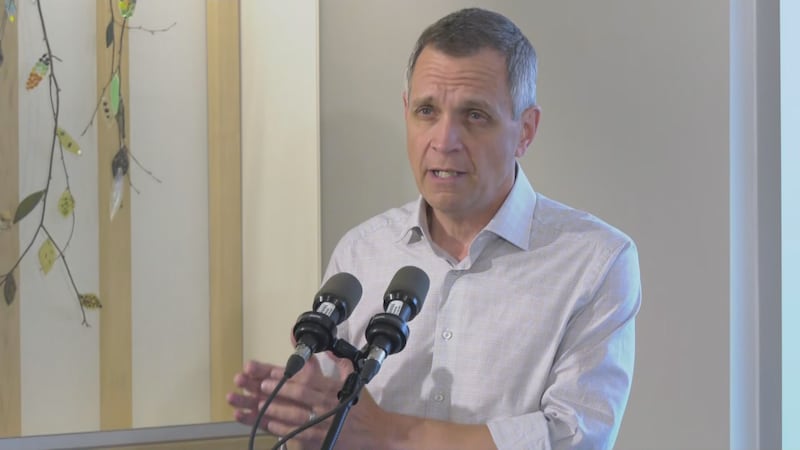
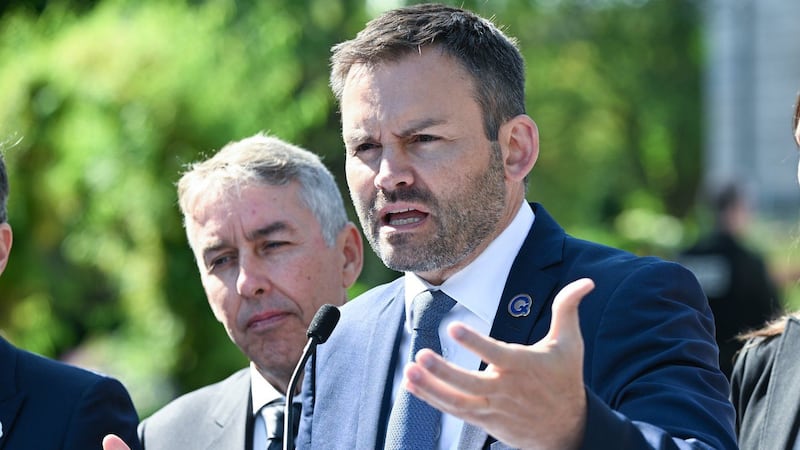
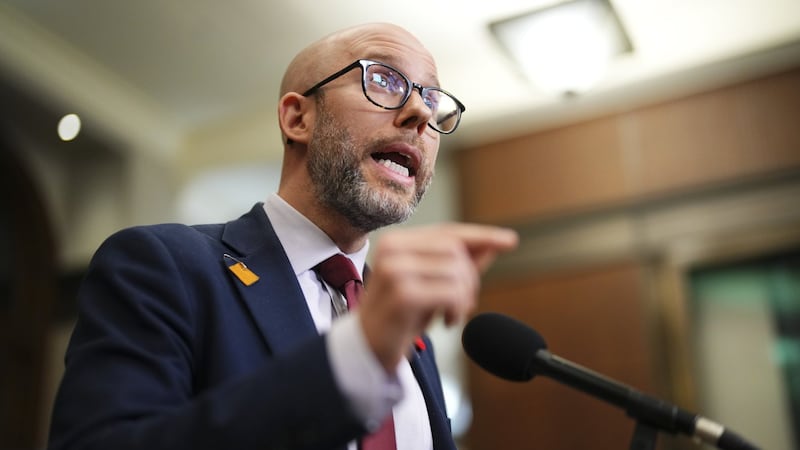
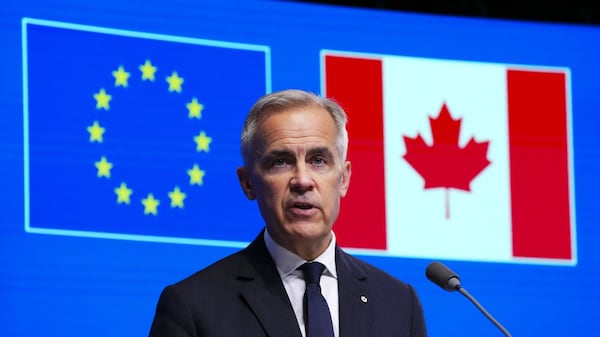
Mark Sutcliffe says he will build upon his efforts to end homelessness in the city of re-elected mayor of Ottawa, pledging to build thousands more affordable homes. Sutcliffe released his housing and homelessness strategy on Wednesday, which includes a recommitment to ending youth homelessness by 2030, ending chronic homelessness “once and for all,” ending the city’s reliance on hotels and motels to house families experiencing homelessness, and building 10,000 more affordable homes than the city had six years ago. All of this would be part of what Sutcliffe said would be a “holistic approach” to homelessness that would be matched with mental health and addiction supports in addition to housing. Sutcliffe says, if re-elected, he is also committed to building 650 new supportive housing units in the next five years, and to strengthening Ottawa Community Housing (OCH) by “cutting red tape, increasing authority, and providing greater resources to OCH.” “There are more than 4,000 people in our transitional and shelter system. On any given night, as many as 500 people are living unsheltered. So, we still have a lot of work to do,” Sutcliffe said. “For as long as I’m mayor, housing affordability and ending homelessness will be among my greatest priorities.” During Sutcliffe’s first term, the City of Ottawa purchased a former hotel at 377 O’Connor Street for $45 million and a former convent in Orléans for $11 million for conversion into transitional housing. In April, council approved waiving development charges, fees and property taxes on hundreds of affordable homes to be built on federal lands. In late 2025, the federal government announced a $400-million joint fund with the city to build affordable homes. Sutcliffe pledged last year to end youth homelessness by 2030. The 2026 budget included $23.25 million to build 350 new affordable housing units, $400,000 towards the Youth Homelessness Action Plan to address youth homelessness and $476,000 for food security. Former mayor Jim Watson declared a housing and homelessness emergency in Ottawa in 2020 and launched the 10-year housing and homelessness plan. The plan was updated this year to extend into 2035. “Today, I’m making a commitment on affordable housing. I’m committing to finishing this decade with 10,000 more affordable homes than we started with. I will secure the funding to build thousands of new affordable units, so that in 2030 we will have 10,000 more affordable homes than we did in 2020. That represents a 50 per cent increase in the total amount of affordable housing in Ottawa,” he said. “We’re about halfway there. We’ve built or secured funding for just over 5,000 affordable units since 2020. We need to move faster and build the remaining 5,000 in the next four years.” The plan relies on securing funding from the federal and provincial governments and from private sources to support the construction of new affordable homes. Sutcliffe is also promising to explore the costs and benefits associated with assuming Ottawa Community Housing’s debt servicing costs, to “enable them to allocate more investment to building new homes and improving existing ones.” The mental health and addiction plan would involve partnering with The Royal and supportive housing partners to add more treatment options, expand daytime programming, impose mandatory care in specific cases, increase investment in supportive housing, and increase on-site supports that keep people more stably housed. Sutcliffe said there is no timeline for his plan, beyond his pledges to end youth homelessness and have 10,000 affordable homes built by 2030. He told reporters no one can provide a timeline. “It’s such a complex problem. There are no easy answers, and it’s going to take more than the municipal government stepping up and doing more than our share of the work to end this crisis,” he said. “We’re going to need the other levels of government to participate, and I can’t make commitments on their behalf. I can only make commitments on what I’ll do if I’m re-elected as mayor.” Opponents critical of Sutcliffe’s record Some of Sutcliffe’s mayoral opponents were critical of his record on homelessness. Candidate Alex Lawson is promising a “top-to-bottom” shelter operations review, done in collaboration with police, paramedics and shelter operators. He criticized Sutcliffe’s plan in a statement to CTV News Ottawa. “Nobody believes Mark Sutcliffe is capable of ending homelessness. If he showed any signs of being capable of this in the last four years, I’d be knocking on doors for him instead of running against him,” he said. Lawson’s campaign said he would be unveiling his homeless policy “in the coming weeks.” Candidate Neil Saravanamuttoo says he would create low-cost tiny homes to act as transitional housing, order a review of police spending and expand Ottawa’s crisis response program. “Mark Sutcliffe has shown that he is the type of politician who will say anything to get re-elected. Now he’s promising to end homelessness but with no date or no real plan other than to ‘supercharge’ existing efforts,” Saravanamuttoo told CTV News Ottawa. “If the status quo has failed for the past four years, why does he think this time is different?” Coun. Jeff Leiper, who is also running for mayor, has promised to build 1,500 non-profit homes per year if elected. He is also promising to create a municipal acquisition fund to purchase at-risk rental buildings and transfer them to non-profit operators before they’re converted or lost. Leiper said homelessness in Ottawa has gotten worse during Sutcliffe’s time as mayor. “Mark Sutcliffe says homelessness has clearly not gotten significantly better on his watch. He’s right. It doubled, but now he’s asking for four more years. Ottawa’s homeless families don’t need a mayor who’s still figuring out his direction. They need a mayor who will get to work on day one to end this crisis,” he said. Fourteen people are running to be mayor of Ottawa: Jeff Leiper, Alex Lawson, Neil Saravanamuttoo, Mark Sutcliffe, Zed Chebib, Peter Westaway, Suraj Harish, Queen Divine Priya Amber Bakshi, Bernard Couchman, Ali Shayvard, Jacob Solomon, Amjad Ali Syed, Josh Rachlis, and Geoff Nicholas. Election day is Oct. 26. With files from CTV News Ottawa’s Austin Lee