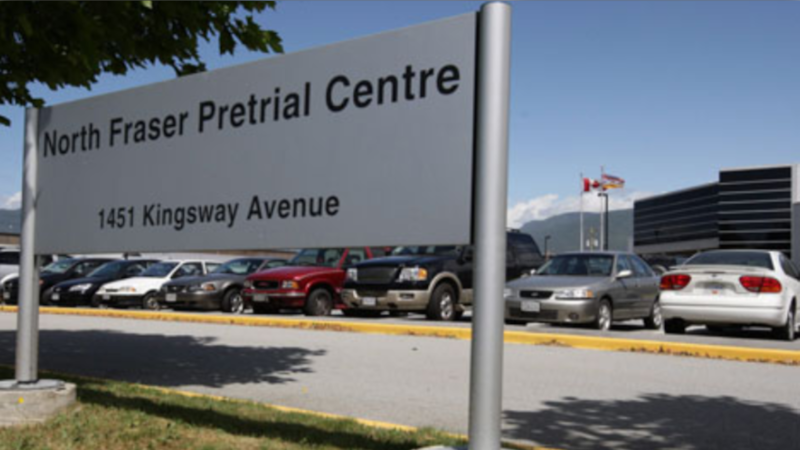
Editor’s note: If you or anyone you know is struggling with mental health, there are a number of ways to get help, including by calling or texting the Suicide Crisis Helpline at 988. A list of local crisis centres is also available here. A man who was put on suicide watch at a correctional facility has been awarded $15,000 in damages for discrimination by B.C.’s Human Rights Tribunal. Ashton Dayries’ complaint against the B.C. Ministry of Public Safety and Solicitor General alleged he was discriminated against on the basis of mental disability during the first 24 hours of his detention at North Fraser Pretrial Centre in 2021, according to a decision published online last week. “Mr. Dayries’ time on suicide watch was brief but impactful. Mr. Dayries testified, and I accept, that his cell was in a deplorable condition. The cell was ‘covered in bodily fluids.’ There were blood, urine, and vomit stains as well as rodents and their droppings. The light in his cell never turned off, and he was not given a pillow, which he needed for a back injury. Mr. Dayries did not receive food, water, or his psychiatric medications during this period,” tribunal member Robin Dean wrote, summarizing the circumstances underlying the complaint. “The condition of the cell made Mr. Dayries feel unsafe and triggered his PTSD and anxiety. He began having an anxiety attack and pressed the emergency call button. The CO (correctional officer) who answered told Mr. Dayries to ‘f*** off’ and ‘tell somebody who cares.’ Mr. Dayries ended up pressing the button two more times; however, he never received help. Rather the CO on the other end mocked him, saying at another point, ‘I don’t know what you want me to do about it, I’m just a voice in the wall.’” B.C. Corrections denied the allegations, telling the tribunal that its records showed the cell had been cleaned and that there was no documentation of any issues or concerns having arisen during the time Dayries was in custody—although it was “undisputed” Dayries had pressed the emergency call button three times. Dean’s decision noted the person who appeared on behalf of B.C. Corrections was familiar with policies and protocols at North Fraser Pretrial Centre but did not have “direct knowledge” of the events that were the basis of the complaint, and that she generally preferred Dayries’ evidence. “I am not persuaded that Mr. Dayries is being untruthful or exaggerating for his own benefit,” the decision said, adding that a letter Dayries wrote while he was at the pretrial centre contained a description of his time on suicide watch that was consistent with what he told the tribunal. The decision said Dayries’ PTSD and anxiety constituted a mental disability, which is a protected characteristic under the province’s Human Rights Code. B.C. Corrections did not dispute this—but did argue that Dayries was not discriminated against on this ground. B.C. Corrections said Dayries did not experience adverse treatment because of his disability and that “causing or contributing to a mental disability can not be discrimination.” Dean rejected this argument because she found that “exacerbation of a disability due to a respondent’s conduct” was sufficient to establish discrimination on the grounds of that disability. In this case, Dean found that withholding Dayries’ medication, placing him in segregation in a “filthy cell” and “mocking him while he was in crisis” constituted a “disability-related adverse impact.” Dean found that the pretrial centre’s protocols for suicide watch were in place to address the risk of self-harm, and that B.C. Corrections did not take steps to try to mitigate or prevent the negative impacts on Dayries. “In this case, corrections did not treat Mr. Dayries with dignity and created barriers to his safe incarceration based on the disabilities that he entered with,” Dean’s decision said. Dayries sought $15,000 in damages for injury to dignity, feelings, and self-respect and was awarded the full amount. Although the suicide watch only spanned 24 hours, Dean found the impact of the discrimination was “severe” and that the power imbalance between Dayries and the correctional service in the circumstances was “extreme.” Dayries complaint also alleged discrimination after he was off suicide watch, but those claims were dismissed. The tribunal found his time in COVID-related quarantine in conditions akin to “solitary confinement” was likely challenging, but that a particular disability-related impact had not been established. His allegation that he was discriminated against on the grounds of religion and Indigeneity when he was not provided with spiritual support was also not found to have been proven because Dean found Dayries’ had not completed the required paperwork. CTV News contacted the Public Safety Ministry to ask if an appeal or review will be sought in the case. “The ministry is aware of the B.C. Human Rights Tribunal’s decision in this matter and respects the tribunal’s role in adjudicating human rights complaints,” an emailed statement received Wednesday said. “We are reviewing the decision and its findings carefully. The ministry is also considering its options, including whether there are grounds to seek a review or appeal. No decision has been made at this time.”