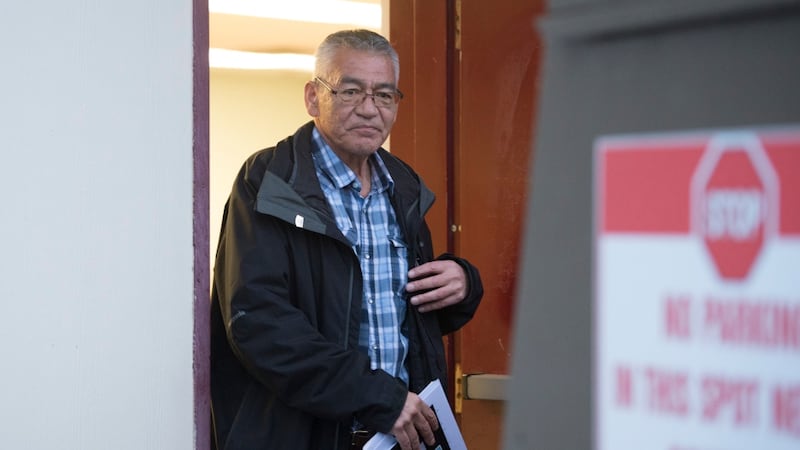
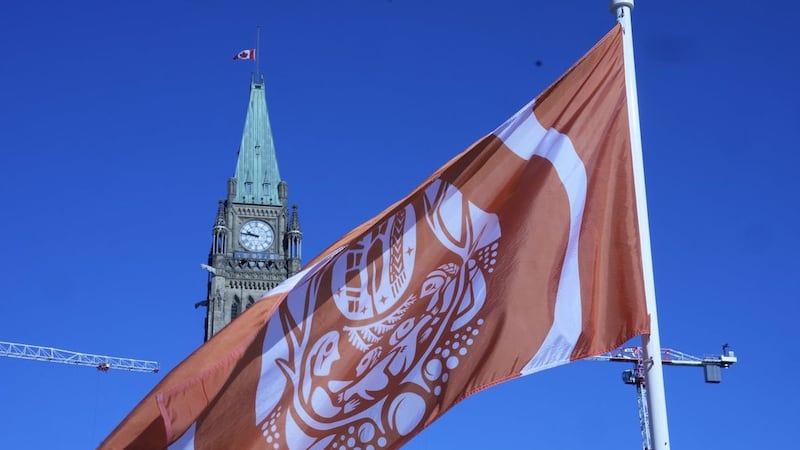
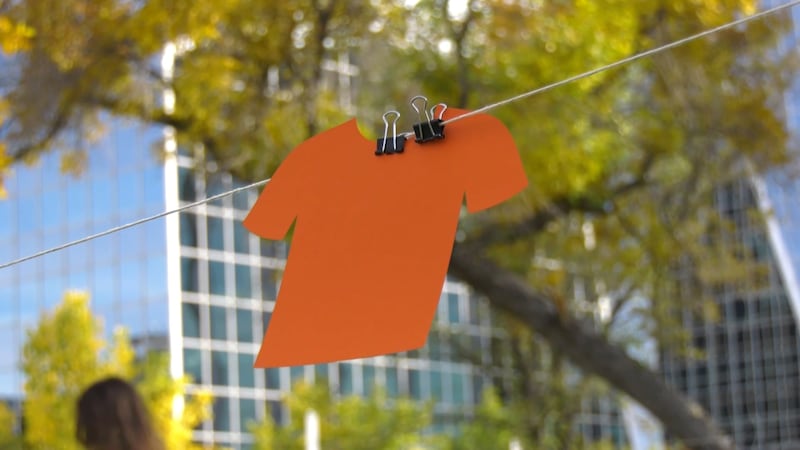
Despite one of the last standing residential schools in Canada being demolished 30 years ago, the challenges it brought for many people on George Gordon First Nation still remains. In remembrance of the mark it left behind, a community walk took place in the community. Residents on George Gordon First Nation walked around the community wearing orange shirts in recognition of the 30 anniversary of the demolition of The Gordon’s Indian Residential School – opened from 1888 to 1996. “Many people that were here today actually went to the residential school with me,” Chief Shawn Longman said. With students from the nation’s current school being present, Longman said it is important to teach them about the challenges people faced on the reserve. “The kids, you know, need to know exactly what has taken place and be reminded that education is important. Education is going to be the key for them to continue to push for our rights,” he said, referring to Canada’s Treaty Rights for Indigenous People. Through education, Longman said kids can learn about their rights as Indigenous peoples that was established through the Canadian Government’s agreement with First Nations in 1874. “This was the agreement and this was the contract that has been signed that’s continually broken which is why you see First Nation people having to always go to court to get our rights established,” Longman said, pointing to a copy of the original treaty card that is displayed at George Gordon Education Center. “It’s unfortunate that in the year 2026 we still have to have these fights when the rest of Canada, you know, everything else is recognized as legal and lawful, but we always got to prove who we are and what our rights [are].” As the walk took place a day before the National Day of Truth and Reconciliation, the purpose of the initiative was to remember the community’s past. Lindsey Bear, principal of George Gordon Education Center, said she remembers being a student at the residential school and witnessing its demolition. Now she hopes those stories can be passed down to the generations to come. “I was a student in these buildings and I still remember walking up to those doors the first day, and I remember the wrecking ball when it hit the building,” Bear said. “It’s not that long ago. I think it’s important for our students to remember and for all people to remember, partly because it affects us still. We see it in our communities, with our families and our youth.” Bear said reconciliation also means remembering the past as it will help build a better future for Indigenous people and youth. “It’s very important to continue working on understanding why some of our issues are continuing in First Nations communities and amongst Indigenous communities everywhere,” she said. “There’s a lot of healing that needs to be done … there’s intergenerational trauma that still exists in our classrooms today. It’s important to recognize that and remember there’s a reason why that is.”