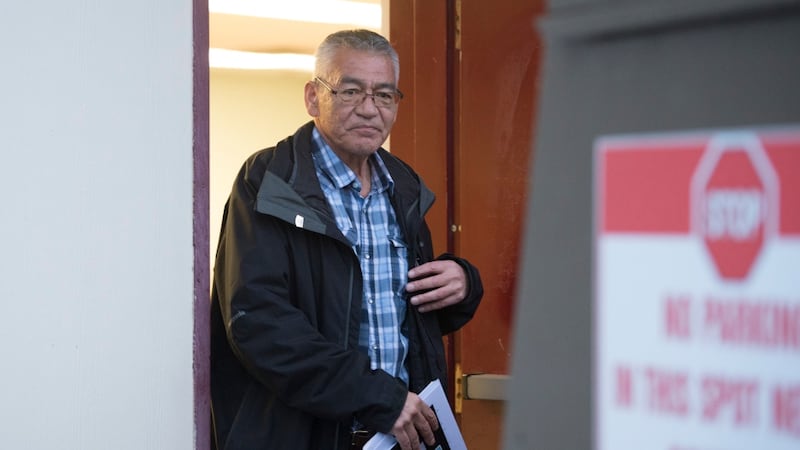
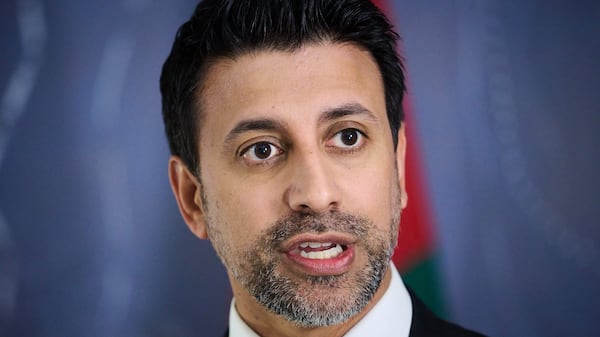
“I think there’ve been signs put up before, but I think they all ended up the same way,” said Mohawk Nation at Kahnawà:ke spokesperson Kenneth Deer. Deer is speaking about a Parti Québécois campaign sign put up on Route 207 at the Highway 30 on-ramp in the Kanien’kehá:ka (Mohawk) community south of Montreal. The sign was unceremoniously taken down by a community member with a sledgehammer who told CTV News he was angered that a Quebec political party would attempt to campaign in his community. Deer has been involved with the Indigenous peoples’ international movement and often attends forums at the United Nations and elsewhere. The community member’s anger likely echoes similar sentiments in the community, Deer said. “I don’t think there’s anybody in town complaining about somebody going and taking the sign down,” he said. Mohawk Council of Grand Chief Cody Diabo saw the video and hopes it reminds Quebec’s political parties of his community’s traditions. “We don’t participate,” he said. “What I thought about it was just a community member, exercising and showing their feelings on the matter.” The two-row wampum Deer explained that the Kanien’kehá:ka people are not Canadians or Quebecers and don’t involve themselves in outside elections. Those governments, likewise, do not interfere with political or cultural actions on Indigenous territory. “That’s based on that two-row relationship, that nation-to-nation relationship,” said Deer. In the two-row relationship, non-Indigenous people are represented by a tall ship and Indigenous people by a canoe travelling down the river of life together. “With that philosophy, we feel it would be a violation of that relationship if we got involved in the selection of who steers their ship, and they should not be involved in who steers our canoe,” said Deer. Geoff Kelley was the Liberal Minister for Aboriginal Affairs (now called Minister Responsible for Relations with the First Nations and the Inuit) for eight years. He worked as liaison between Quebec City and the Mohawk Council of Kahnawake. He noted that political parties need to be aware of the two-row relationship but, having been through more than a few campaigns, cautioned about reading too much into a PQ staffer’s decision to erect the sign in Kahnawake. Kelley said signs are put up by well-intentioned volunteers, who may not have been aware of the realities in Kahnawake. “To say that it was sending a message to a community or something like that, I’d hold off a little bit on that,” said Kelley. “My son (Jacques-Cartier Liberal candidate Gregory Kelley) is now doing it, I did it for seven elections, and you try to get volunteers to go out and put posters on telephone poles.” Non-participation Kelley said that it’s important to remember that Indigenous people in Canada were only afforded the right to vote in 1960 and in 1969 in Quebec. “For a long time they were excluded from our elections, so some First Nations choose not to participate, and it’s very much within their rights,” he said. Though they have the right, Kahnawake community members rarely, if ever, vote federally or provincially, and there are no polling stations on the territory. “We don’t participate because it’s not our system,” said Diabo. “It’s not our governing system, our political system. We stay in our lane, and we expect the federal, provincial governments to stay in their lane.” In addition, Elections Quebec said that the Quebec Elections Act does not apply on Indigenous territories as they are under federal jurisdiction. “It would therefore be best for parties and candidates who wish to post election signs on the territory of an Indigenous reserve or territory to check with the authorities of the reserve or territory in question,” said spokesperson Julie St-Arnaud-Drolet. The Parti Québécois did not respond to requests for comment from CTV News. ‘Ignorance of our political position’ Deer feels erecting the sign shows a lack of understanding and a need for education. “I think again, the Parti Québécois is not politically aware of the political situation and the relationship between Indigenous peoples and the people of Quebec and the people of Canada,” he said. “It continues to show the ignorance of our political positions and how we view Quebec and Canadian elections.” “There’s always more that needs to be done to understand questions of jurisdiction, what the powers and jurisdiction of a community are, of a band council, of traditional leadership,” said Kelley. “There are always important questions.” Deer said he would like to see outside governments be more respectful of Indigenous peoples. “Because they don’t understand Indigenous people, I think that’s a fundamental difference, and that’s why we tend to have conflict or confrontations because they don’t really understand our point of view, and this leads to misunderstandings.”