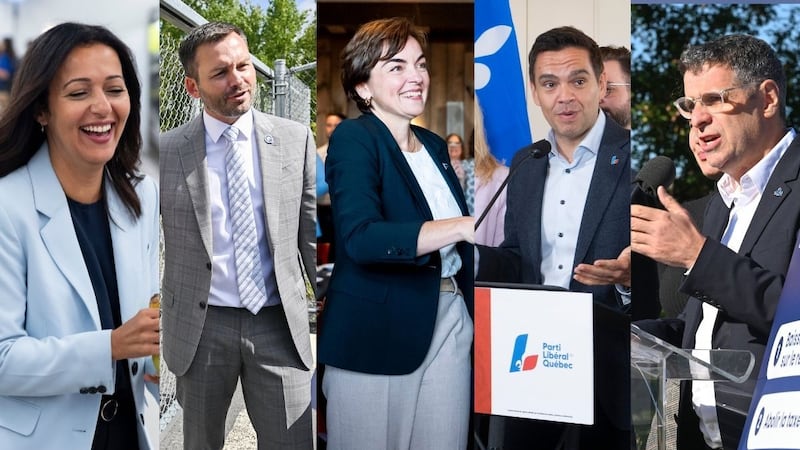
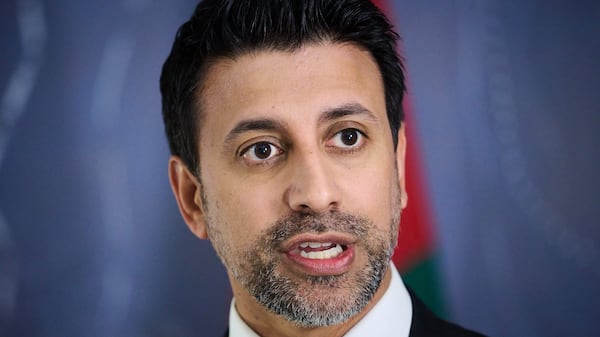
The Montreal municipal election campaign is officially upon us. According to Élections Montréal, “this major democratic event will be an opportunity to elect the 103 people who will sit on the city council and the 19 borough councils in Montreal until 2029.” “Organizing an election in Montreal is a very complex operation,” said Chief Electoral Officer Emmanuel Tani Moore. ”This should not be an obstacle to change, but rather a motivation to evolve the way we vote in municipal elections.” Élections Montréal says that for this election, it plans to implement three major changes: voting stations on university and college campuses, adding photos of candidates on ballots for all positions and publishing candidate profiles on its website. The organization explains that these changes are a result of a review of the last election, in 2021, when voter turnout was low, at 38.3 per cent. This is compared to 2013, when voter turnout was 43.3 per cent, and in 2017, when it was 42.5 per cent. Additionally, only one in five young people aged 18 to 24 voted. “This low turnout is concerning and must lead to action,” Élections Montréal stated. Here’s everything you need to know ahead of voting day: When is the election? The municipal election is slated from 10 a.m. to 8 p.m. on Nov. 2. When is advance polling? Advance polling is scheduled from 12 p.m. to 8 p.m. on Oct. 26. How long is the election campaign? The election period is from Sept. 19 to Nov. 2. Can I vote? In order to vote, you must make sure you are on the list of electors with the correct home address. You must do this in advance, as you will not be able to add your name to the list or have your address changed on election day. You have until Oct. 16 to confirm that you are on the list and make any necessary changes. Where do I vote? You should receive a notice from your municipality with your name, address and all other relevant information, including where to vote for advance polling and on election day. Can I bring my children to vote? Youngsters are invited to have their say at the “Little Montreal Polling Stations,” where anyone under the age of 18 can vote for the action they think is most helpful to protect the environment. What if I can’t vote in person? There are options available to anyone unable to vote in person, including mobile polling and voting by mail. To do this, you must first confirm that you are on the list of electors and that all of your information is accurate ahead of voting day. You will not be able to add your name to the list or have your address changed on election day. For mobile polling, you must fill out the registration form, which should be available at your care centre, residence or health care facility, and return it by the deadline. If you are eligible to vote by mail, you should receive a voting by mail kit 10 days before polling day. For any questions, contact your returning officer. What if I’m working? Legally, your employer must give you at least four consecutive hours to vote on polling day, with no reduction in pay or other penalty. For more information, click here. What if I’m in school? For the first time in a municipal election in Quebec, students from 16 post-secondary institutions will be able to exercise their right to vote at their educational institution, regardless of where they live in Montreal, according to Élections Montréal. Student voting is slated for Oct. 24, 27, 28, and 29. For more information, click here. How can I vote if I am a senior? Polling stations are also set to be installed at seniors’ residences, “at times that are adapted to these living environments.” Voting at seniors’ homes is set for Oct. 25 at more than 70 large residences. You can check if your residence is on the list here. You must make the request to vote this way before Oct. 16. How can I vote if I have reduced mobility? All or most polling stations should be accessible to people of all abilities. If your polling station is not accessible on election day, you can obtain permission to vote at another polling station in your electoral division. Alternatively, anyone unable to leave their home due to health reasons can request to vote at home. You must make the request to vote this way before Oct. 16. Who are the candidates? That all depends on which borough, town, city or village you live in, as each has its own electoral process and nominees. To find out who is currently in office, as well as keep up to date on who is running, click here. The current candidates for the Montreal mayoralty are Projet Montréal’s Luc Rabouin, Ensemble Montréal’s Soraya Martinez Ferrada, Transition Montréal’s Craig Sauvé, Futur Montréal’s Jean-François Kacou and Action Montréal’s Gilbert Thibodeau. Projet Montréal incumbent Valérie Plante is not running for reelection. Can I run for mayor or councillor? Anyone thinking of running can submit their nomination papers from Sept. 19 to Oct. 3 at 4:30 p.m. After this date, Élections Montréal will confirm the number of candidates for each riding. For more information, click here. By the numbers Here are a few facts about the Montreal municipal election: 2: Montreal has the second-largest municipal election in the country. 4: The usual number of years between municipal elections. 19: The number of boroughs that make up the City of Montreal. 45: The length of the electoral campaign. 58: The number of electoral districts in Montreal. 103: The number of elected positions to fill in Montreal. 340: The number of candidates in the 2021 general election. 450: The expected number of polling stations on election day. 13,000: The number of positions to be filled to help voters on election day. 13,000: The number of ballots to be entered and compiled on election night. 1.134 million: The estimated number of eligible voters. 1.5 million: The number of documents to be mailed to inform voters about their rights and the election. 4.5 million: The number of ballots to be printed for the election.