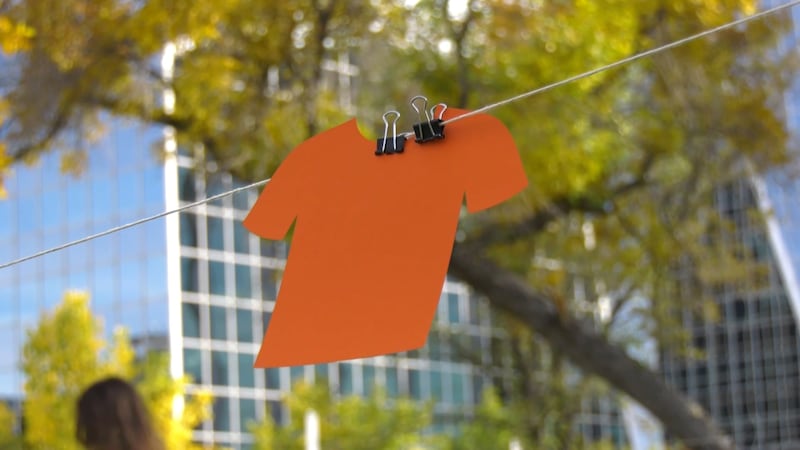
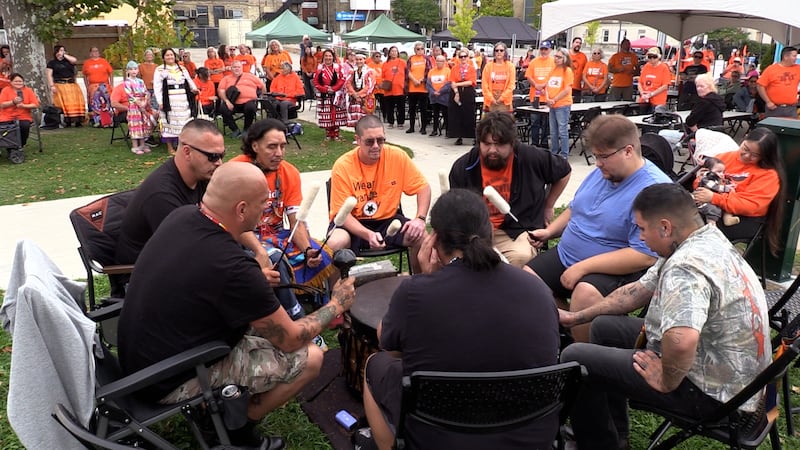
Chris Patriquin had planned to take the microphone and continue to advocate for clean drinking water on Oneida Nation of the Thames during Truth and Reconciliation Day festivities. The St. Thomas, Ont. man owns a water business and makes multiple deliveries every week to serve local First Nation communities. “Sadly, this is a yearly reminder for all of you that our closest indigenous neighbors are still without clean, safe drinking water,” said Patriquin. “The boil water advisory in Oneida Nation of the Thames continues to this day, seven years after it was initially announced. As I’ve stated before, in my opinion, the conversation around Truth and Reconciliation cannot truly start until all indigenous communities have clean, safe drinking water.” However, his speech quickly pivoted to a very personal story after seeing a protest against Orange Shirt Day by Second Sons Canada this week. “These cowardly, masked protesters were holding a sign that said, ‘Got Bones?’ similar to the ‘Got Milk?’ campaign,” said Patriquin. “They were trying to deny the trauma of residential schools and the conversation around Truth and Reconciliation unless someone or anyone could produce the remains of dead children as proof, the residential school system was designed to take the Indian out of the child. It did not need to leave a body in every field to succeed. The evidence is in the families that are still healing, three and four generations later. Every indigenous person you meet is a survivor of this system.” Patriquin said every Indigenous person is a survivor whether or not they ever set foot in a residential school.He went into detail about how when he was 23 years old, he tried to end his life. He is grateful to have woken up 48 hours after taking pills and alcohol.Ten years later, his cousin took his life. He said they were both abused as young boys and after being told to keep it a secret, they did. “Anger, insecurity, substance abuse, broken relationships, that’s what intergenerational trauma looks like,” he added. “When there are no graves to dig and no bodies to count, it lives in the living. It shows up in the suicide rates, the addiction rates, the incarceration rates, the broken trust and the silence that still sits at so many kitchen tables.” He says this day is about remembering a six-year-old named Phyllis Webster who had her orange shirt taken from her. “That same system took the language, culture and safety from thousands of kids, some of those kids never came home,” said Patriquin. “Many more came home carrying wounds that they are still passing down. The damage is real. The trauma is real. You do not need a body to prove it. You only need to listen to the living.” The microphone was then handed to grass dancer Jonas Phillips. He spoke about years of trauma leading to a family which used alcohol and drugs. He proudly told of his ability to get clean and sober and bringing his grandchildren to be in attendance to support teachings about the past. “I heard someone today say the world reconciliation,” said Phillips. “It should be Truth and Action. People like me have to be strong and get away from drugs and alcohol and do what they have to do to survive.” He added that all Indigenous people are lucky to be alive. “We all survived,” said Phillips. “A very small percentage of people survived a very big genocide. I would like to show other people what I’m doing better, why I’m doing better, and how I could do better. If I can do it, anyone else can do it.” The ceremony featured performances by Black Ops singers drum group, Indigenous hip hop artist Braeden Rickwood, Jingle Dress Dancers and guest speakers.