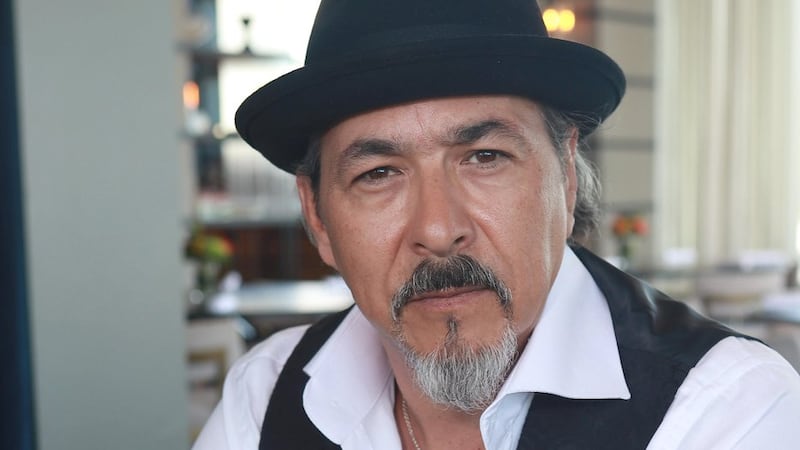
A Montreal hair salon has been ordered to pay $500 to a customer who claimed the company’s booking system is discriminatory. Alexe Frédéric Migneault identifies as non-binary and was asked to select a male or female haircut on the salon’s site in 2023. Station 10 is a small hair salon that charges by the minute. “The concept seemed great because they charge based on the time that it takes to do the cut and not on based on the gender of the person,” said Migneault. Migneault was disappointed to find that during the booking process, they were asked to select between a men’s or women’s cut and sent an email asking for accommodation. They say they were told to just select one or the other. “It is not fair, and it’s not legal to tell me no, since you don’t fit into my worldview, I don’t want to do anything with you, and I don’t want you as my customer,” they said. Alexis Labrecque, the salon’s co-owner, said the policy has nothing to do with ideology. He said the business model is low-cost-high-volume, and that they only take bookings online and ask for their customers’ genders to help with scheduling. “It takes typically takes longer for a woman’s haircut than a man’s haircut,” he said. “So we optimize our agendas accordingly. We also get, statistics for marketing.” For Migneault, however, the lack of accommodation had a major impact. “I was already spiraling into a huge mental health crisis, and it precipitated my, falling to complete a disability,” they said. “I was unable to work for a year and a half.” They filed a complaint with the Human Rights Commission, which recommended a $500 settlement. Labrecque refused to pay, so Migneault sued for $12,000. “We fought back because we we didn’t agree with the prejudice that we might have caused,” said Lebrecque, who added that a few months after receiving the complaint, the salon updated its website to include a gender-neutral booking option. The courts agreed with the commission and ordered Station 10 to pay $500 in damages. “It’s clearly a precedent,” said Labrecque. “The amount we have to pay is relatively small compared to the precedent it creates for legal debates in Quebec.” For Migneault, that precedent is a win. “It was discrimination, and non-binary people should not be forced to pick between men and women if they don’t want to identify as such,” they said. They said that it may seem like a small inconvenience to some, but to them, it’s about being able to participate in society. In a post on social media, the Salon Association of Quebec said information must be provided before sanctions are imposed. “When social change leads to new or more specific legal implications, it should be accompanied by clear and proactive information; accessible official guidelines; and structured support.” The association said the transition to more inclusive models should be gradual and supervised to avoid penalizing companies for structures “inherited” from the past. “We believe that inclusion must progress with businesses, not against them. In this case there was no refusal of service. The correction was made before the judgment. We therefore question the proportionality of the sanction in a context where the situation had already been corrected,” the association said. It added that many hair salons had reached out for guidance on what measures to take in the short term, noting it could not guarantee there would be no further complaints elsewhere in Quebec.