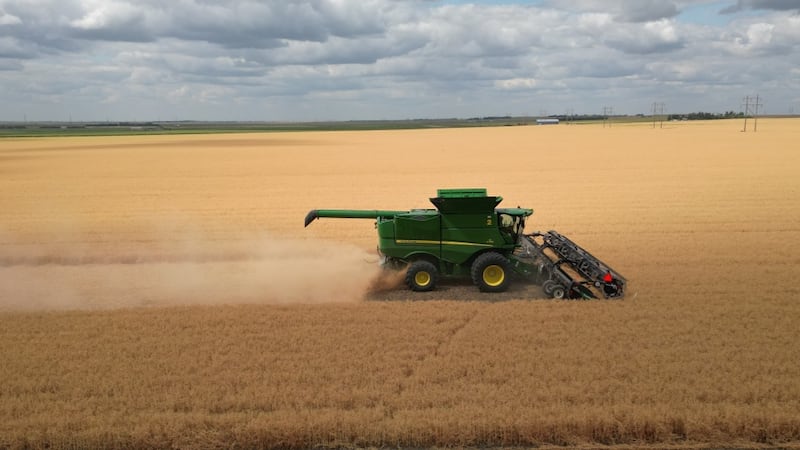
A 2023 train derailment in central Alberta has prompted the Transportation Safety Board of Canada (TSB) to call for enhanced analytics of railcar wheels to better identify failing mechanisms. On April 5, 2023, a CN freight train was travelling west on the Wainwright Subdivision when a train-initiated brake stopped it. During inspection, the conductor found that 18 cars had been derailed and grain had spilled from overturned and breached railcars. No injuries were reported. A TSB investigation found that a wheel had a shattered rim. Repeated impacts damaged the wheel and caused a series of fractures along the track causing the derailment. Regular wheel inspections were done and complied with TSB standards but no wheel condition issues were identified. Railways use wheel impact load detector (WILD) data to monitor wheel condition, measure impact forces and identify problematic wheels. WILD data is currently measured and assessed independently from one another and doesn’t evaluate trends over time or the rate of deterioration. This means rapidly deteriorating wheels might not be identified from other impact conditions which can result in failure before the wheel is removed. Before the train was derailed, the wheel was to be removed in Edmonton after impact readings showed it wasn’t up to CN’s WILD standards, but the wheel failed before arriving. The TSB is calling on Transport Canada to implement enhanced analytical methods that will help identify trends and rate of wheel deterioration. The agency also raised a safety concern after it was found that the damaged wheel was made in 1991 before steel cleanliness standards were implemented in 2003. Wheels made before 2003 are more prone to shattering and rim failure.