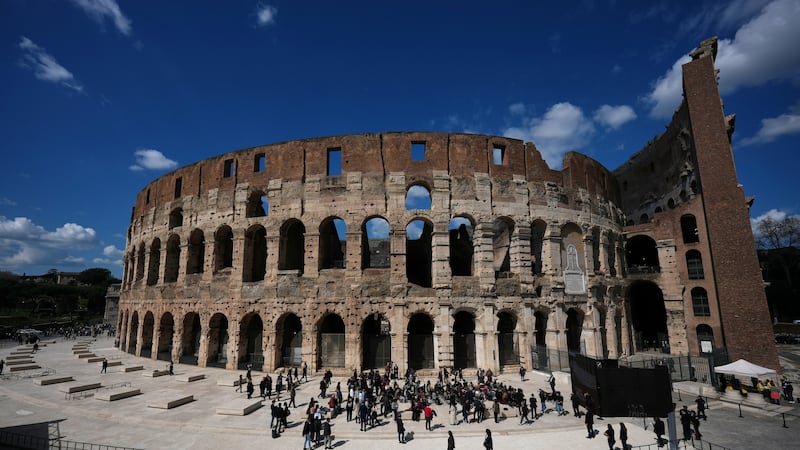
Rome’s ancient Colosseum, where gladiators were once gored by wild animals to the delight of cheering crowds, has never exactly been associated with safety. Even in fiction, Henry James’ heroine “Daisy Miller” succumbed to malaria caught during a moonlight visit to the amphitheater. Today, the danger has a more modern twist. In July, a group of about 50 young people left police officers injured in an attack that involved shooting fireworks. Authorities say the incident was part of a pattern of increased crime around the historic area. In an effort to turn the tide on security issues at the Colosseum, Rome’s officials have now declared the area around the site a “red zone,” meaning that extra security has been deployed with greater powers to protect both residents and tourists, blaming the recent trouble on “predatory crimes and drug dealing” linked to urban decay. Imposed in late August, the zone will remain in place until Dec. 24. Extra security has also been added near the city’s main Termini train station, St. Peter’s Basilica, and the Basilica of Santa Maria Maggiore, which has seen an increase in visitors since Pope Francis was laid to rest in a tomb there in April 2025. The new red zone will see local police presence enhanced around the clock alongside a military presence. Italy’s military already protects high-traffic tourist attractions with barriers and pop-up checkpoints. But armed officers dressed in camouflage alongside military vehicles have apparently not acted as enough of a deterrent to petty criminals. “Security is tight here, but I just saw a woman get pickpocketed,” Janelle Triton, an American tourist visiting the Colosseum site from Philadelphia, told CNN on Tuesday afternoon. She said the thief had gone by the time law enforcement was alerted. “We were told by our hotel not to come here at night though, so we have avoided the area.” The decline in safety at one of Rome’s most prestigious attractions comes despite millions of dollars spent on infrastructure improvements in recent years — investments which officials have admitted may actually be fueling crime. ‘Serious public emergency’ Lamberto Giannini, who’s responsible for security in Rome, says a new Colosseum metro station that was part of an $8.3 billion project to enhance the city’s underground subway system is one of the factors behind the rise in incidents. The station, which opened in December 2025, contains a multi-floor underground museum showcasing artifacts unearthed during years of construction work on a new metro line. But Giannini says it has also become a conduit for marginalized youth heading into Rome’s historical center to prey on both visitors and the residents who visit the area after the tourists have left. The red zone ordinance issued by Giannini states that existing security measures have proved inadequate in tackling a “serious public emergency” that presents a “risk of serious damage” to sensitive areas. It gives security officers greater powers to arrest suspected troublemakers or to order them to leave the area. A spokesperson for the prefect told CNN there would be no further comment on the issue, but a report in September is expected to detail what impact the red zone has had on crime.